Blogs | Steelstrong Valves

Top Industrial Gate Valve Manufacturers for Global Buyers?

Choosing reliable industrial gate valves can influence plant safety, maintenance costs, and long-term operating stability. Global buyers often compare manufacturers by pressure ratings, materials, testing procedures, delivery performance, and technical support. A valve may look robust in a catalog, yet its real value appears under demanding service conditions. Think of a refinery line exposed to heat, vibration, and corrosive media. Small design weaknesses can become expensive shutdowns.

This guide examines leading industrial gate valve manufacturers serving international markets. It considers manufacturing experience, engineering capability, quality systems, and evidence from completed projects. Certifications matter, but they should not replace practical verification. Buyers should review inspection records, material traceability, factory testing, and after-sales responsiveness. Some suppliers communicate clearly before the purchase, then become difficult to reach afterward. That risk deserves attention.

No manufacturer fits every application. A trusted producer for water infrastructure may not suit high-temperature process service. Likewise, the lowest quotation may hide shorter service life or limited customization. Careful buyers should match valve design with pipeline size, pressure class, operating temperature, fluid characteristics, and installation conditions. Ask direct questions. Request realistic lead times. Check references where possible.

There is no perfect shortlist.

The manufacturers discussed here are assessed through a practical, evidence-based lens. Their strengths, limitations, production capabilities, and global support networks are considered together. This approach helps engineers, distributors, and procurement teams make more defensible decisions, while recognizing that supplier performance can vary by project, region, and contract execution.
Top Industrial Gate Valve Manufacturers for Global Buyers?

What Industrial Gate Valves Are and Where They Are Used

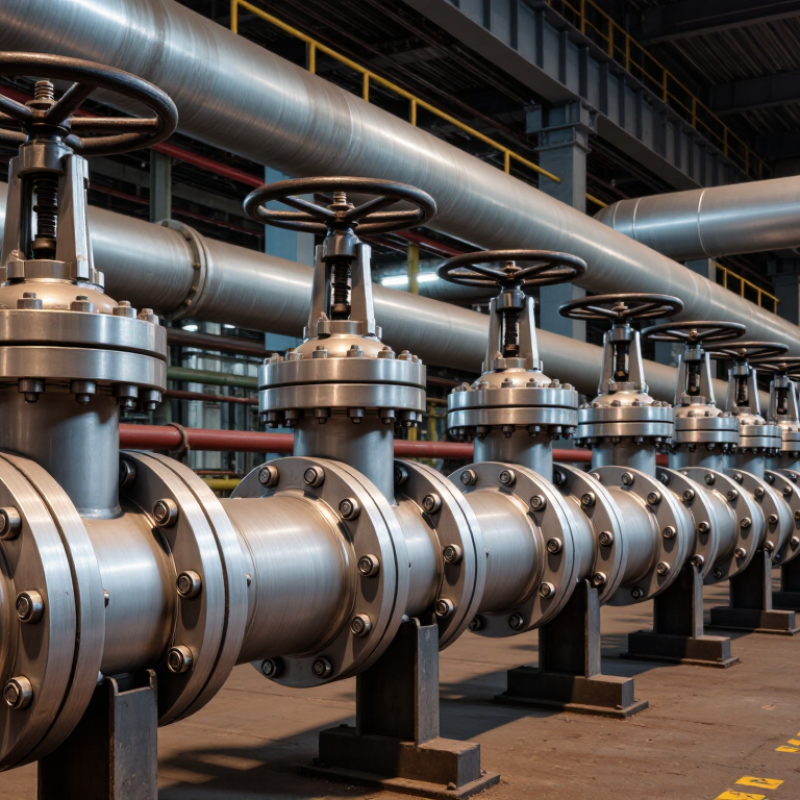
Industrial gate valves control flow by moving a solid gate vertically between two sealing seats. When fully open, the gate leaves a nearly straight passage for the fluid. When closed, it isolates the pipeline with minimal leakage. These valves are designed mainly for on-off service, not continuous throttling. Partial opening can damage the seats through vibration and erosion.

Their applications are broad. Water treatment plants use them on intake lines, filters, and distribution headers. Power stations install them around boilers, cooling systems, and steam pipelines. Oil, gas, chemical, and mining facilities select them for high-pressure isolation. Wedge gates suit many general services, while parallel gates can perform better in certain temperature and pressure conditions. Selection depends on fluid type, pressure rating, temperature, pipe size, and sealing material.

Field experience shows that installation details matter as much as the valve design. The pipe should be properly supported, and the stem needs enough clearance for operation and inspection. Debris can score the sealing surfaces. It happens often. Operators should open and close the valve gradually, while maintenance teams check packing, bolts, corrosion, and actuator alignment. A valve that looks oversized may still fail if its materials conflict with the process fluid. Specifications should be reviewed against recognized industry standards and site conditions, rather than copied from an older project without question.

Industrial Gate Valve Pressure Classes for Global Buyers

Gate valves are designed mainly for fully open or fully closed flow isolation in pipelines. The chart shows reference pressure ratings at 100°F (38°C) for carbon steel WCB valves across common ASME pressure classes. They are widely used in water treatment, oil and gas, power generation, chemical processing, and industrial pipeline systems. Actual ratings may change with valve material, temperature, size, and applicable standards.

Key Standards for Evaluating Global Gate Valve Manufacturers

Top Industrial Gate Valve Manufacturers for Global Buyers?

Global gate valve buyers should evaluate manufacturers against recognized standards, not attractive catalogs alone. API 600 and ASME B16.34 help verify valve design, pressure ratings, and material requirements. API 598 and ISO 5208 provide practical guidance for shell and seat testing. For projects using European specifications, EN 12266 may also be relevant. The correct standard depends on pipeline service, temperature, pressure, and regional requirements.

Request material certificates, heat numbers, and inspection records for every pressure-containing component. A reliable manufacturer should explain how castings, forgings, welding, and machining are controlled. Ask for dimensional reports and test results, not general quality statements. Factory audits can reveal useful details, such as calibrated test benches, clean storage areas, and traceable inspection tags. Small details matter.

Performance history deserves equal attention. Ask for references from similar oil, water, power, or chemical applications. Confirm whether the supplier can support spare parts, repair guidance, and technical communication after delivery. Certifications help, but they are not proof of perfect execution. A polished document can still hide weak process control. I would also examine failure reports honestly, because every experienced manufacturer has faced problems. The important question is how quickly and transparently those problems were corrected.

Top Industrial Gate Valve Manufacturers for Global Buyers? - Key Standards for Evaluating Global Gate Valve Manufacturers

Evaluation Dimension Relevant Standard or Reference Objective Data to Request Practical Benchmark for Global Buyers Why It Matters
Design and Product Scope API 600, API 603, API 6D, ASME B16.34, EN 1984 Valve type, nominal size, pressure class, body material, bonnet design, wedge or slab gate configuration The manufacturer should provide a documented product range matched to the intended process, pipeline, or power application. A broad catalogue is not sufficient unless the proposed design is suitable for the service conditions and applicable code.
Pressure and Temperature Rating ASME B16.34; ASME B16.5; ASME B16.47 where applicable Pressure class or PN rating, pressure-temperature tables, flange dimensions, allowable operating temperature The pressure-temperature rating should be traceable to the selected material group and design standard rather than stated as a single maximum pressure. Valve ratings change with material and temperature; a nominal class alone does not define the safe operating limit.
Pressure Testing and Leakage Control API 598; ISO 5208; API 6D for pipeline valves Shell-test pressure, seat-test method, test duration, allowable leakage rate, test medium, test records The supplier should state the exact test standard and acceptance class used for each valve size and pressure rating. Consistent testing reduces the risk of external leakage, seat leakage, and premature commissioning failures.
Materials and Traceability ASME Section II material specifications; EN 10204 inspection documents Material grades, heat numbers, cast or forged component records, certificates, hardness data, positive material identification records Critical pressure-containing parts should be traceable from the material certificate through machining, assembly, and final inspection. Traceability supports quality investigations, regulatory compliance, and replacement-part accuracy.
Corrosion and Sour-Service Suitability NACE MR0175/ISO 15156 for oil and gas production environments; ISO 21457 for materials selection guidance Process composition, hydrogen sulfide exposure, chloride level, temperature, material compliance statement, coating system The manufacturer should confirm material suitability against the actual medium, concentration, temperature, and pressure—not only provide a generic corrosion-resistant option. Incorrect material selection can cause stress-corrosion cracking, pitting, erosion, or rapid loss of sealing performance.
Fugitive Emissions ISO 15848-1 and ISO 15848-2; applicable local environmental requirements Emission class, test temperature, mechanical-cycle count, packing material, stem-seal construction, test report For volatile or hazardous media, request an emissions classification and test conditions that match the intended operating service. Stem and bonnet leakage can create safety, environmental, and compliance risks even when pressure-seat tests pass.
Fire-Safe Performance API 607 for quarter-turn and certain soft-seated valves; API 6FA for fire testing of valves Fire-test certificate, applicable valve configuration, seat and stem leakage results before and after fire exposure A fire-safe claim should identify the tested design and standard; it should not be applied automatically to every valve variation. Fire-tested construction can help limit loss of containment during a hydrocarbon fire, subject to the tested configuration.
Quality Management System ISO 9001; project-specific quality plans and inspection-and-test plans Certificate scope, certificate validity, nonconformance process, calibration system, internal inspection records Verify that the certificate covers the relevant manufacturing activity and production location, not merely an unrelated trading or office entity. A functioning quality system improves repeatability, corrective action, documentation, and delivery consistency.
Inspection and Non-Destructive Examination ASME Section V; applicable ASTM examination methods; project specifications Radiographic, ultrasonic, magnetic-particle, liquid-penetrant, visual-inspection, and dimensional reports where specified Inspection extent and acceptance criteria should be agreed before production and linked to the valve’s criticality and material. Independent or witnessed inspection can identify casting, forging, welding, and machining defects before shipment.
Actuation and Operational Torque Applicable actuator, control, and project engineering specifications Breakaway torque, running torque, stem thrust, gearbox ratio, actuator sizing margin, number of operating cycles Actuator sizing should be based on documented worst-case torque or thrust, including pressure differential, packing friction, and service temperature. Correct sizing prevents failure to open or close and reduces the risk of stem, gearbox, or actuator damage.
Manufacturing Capacity and Lead Time Contract requirements, production schedule, inspection-and-test plan Monthly capacity, machining capability, critical-path components, standard and custom lead times, delivery performance data Obtain a written schedule showing engineering approval, material procurement, machining, testing, documentation, and shipment milestones. A technically compliant valve is not commercially useful if production constraints threaten the project schedule.
Documentation and Global Support Customer specification; applicable conformity and export requirements General arrangement drawings, data sheets, installation manuals, spare-parts lists, certificates, packing records, warranty terms Documentation should be supplied in the buyer’s required format and include complete valve identification and revision control. Accurate documentation supports installation, maintenance, audits, customs clearance, and long-term asset management.
Total Cost of Ownership Lifecycle-cost methodology; project maintenance requirements Purchase price, spare-parts cost, expected service interval, actuator energy demand, repair options, warranty, logistics cost Compare qualified quotations using the same technical scope, delivery basis, inspection scope, documentation level, and warranty conditions. The lowest purchase price may produce higher costs through leakage, downtime, difficult repairs, or limited spare-parts availability.
Buyer note: Standards and certifications should be verified against the latest applicable edition, project specification, service conditions, and the exact valve configuration offered.

Leading Industrial Gate Valve Manufacturers by Region and Specialty

Top Industrial Gate Valve Manufacturers for Global Buyers

Regional specialization matters when selecting industrial gate valve manufacturers. Grand View Research estimates the broader industrial valves market reached about USD 77.2 billion in 2023. Demand is supported by water treatment, energy, chemicals, and manufacturing.

North American suppliers often emphasize traceability, actuator integration, and compliance documentation. European manufacturers commonly focus on low-emission designs, cryogenic service, and engineered solutions. Asian production hubs frequently offer broad size ranges, competitive pricing, and high-volume fabrication.

These patterns are useful, but they are not absolute.

Specialty should guide the shortlist.

For high-pressure pipelines, review shell-test records, pressure classes, and material certificates. For corrosive chemical duty, compare alloy selection, sealing materials, and cycle testing. Water projects need reliable coatings, buried-service protection, and simple maintenance access.

The UN World Water Development Report 2024 notes that agriculture accounts for roughly 70% of global freshwater withdrawals, reinforcing the need for dependable flow isolation in irrigation and treatment systems.

Regional labels can mislead. A lower quotation may hide longer validation work.

Tips:

Ask for test procedures, not only certificates. Confirm API, ASME, ISO, or local requirements before ordering. Request previous project references in similar media and pressure conditions. Check lead time, spare-part availability, and inspection access. I would also compare total ownership cost, because the cheapest valve is rarely the cheapest decision.

How to Compare Quality, Certification, Pricing, and Delivery

For global buyers, comparing industrial gate valve manufacturers requires more than a polished catalog. Start with service conditions: pressure class, temperature, media, size, and end connection. A valve for abrasive slurry needs different materials than one handling clean water. Ask for material certificates, pressure-test records, and traceability from casting to final assembly. Reliable suppliers explain standards clearly, rather than hiding behind general claims. Check certifications such as ISO 9001 and approvals required in the destination market. Certification alone is not proof of field performance. Easy to forget.

Pricing should be compared line by line. Include body material, trim, actuator options, inspection, coating, packaging, freight, and spare parts. A low quotation may exclude testing or use a cheaper sealing design. Request a sample inspection plan and define acceptance criteria before placing an order. In my experience, witnessed hydrostatic tests and dimensional checks reveal problems early. However, inspection adds time and cost. Buyers sometimes demand everything, then reject the budget. Keep priorities clear.

Delivery depends on production capacity, component availability, and export documentation. Ask for a realistic schedule with milestones, not a hopeful date. Confirm how delays are reported and whether replacement parts can ship separately. Review references from projects with similar pressure ratings and operating environments. A factory visit or video audit can verify machining, storage, and test equipment. Photos can mislead. Even a strong supplier may miss a deadline when specifications change late. Record every change in writing.

A Practical Guide to Selecting the Right Manufacturer for Your Project

Top Industrial Gate Valve Manufacturers for Global Buyers?
A Practical Guide to Selecting the Right Manufacturer for Your Project

Selecting a gate valve manufacturer requires more than comparing unit prices. Start with the operating details: medium, pressure, temperature, pipe size, and installation environment. A reliable supplier should explain how its valve design fits these conditions. Request material certificates, pressure-test records, dimensional drawings, and evidence of quality-system control. Check whether production follows recognized international standards. Ask for serial-number traceability, not vague assurances.

Experience becomes visible in small details. Examine the proposed body material, sealing arrangement, stem protection, coating thickness, and actuator compatibility. For corrosive service, confirm testing rather than accepting a generic “industrial grade” description. Ask about inspection points before shipment. Factory audits, sample checks, and independent testing can expose problems early. They may also slow procurement.

Review the manufacturer’s technical support after delivery. Can its engineers answer installation questions quickly? Are spare parts identified by drawing and material? Does the warranty clearly define exclusions? Speak with comparable industrial users when possible, and request references from similar pressure classes. One practical lesson is uncomfortable: the cheapest quotation often excludes testing, documentation, or suitable packaging. Yet an expensive proposal is not automatically safer. I have seen specifications become overly complex, creating delays without improving service life. Leave room for correction, and challenge every requirement that cannot be linked to actual operating conditions.