Who are China’s top stainless steel valve manufacturers, and what separates a dependable supplier from a polished catalogue? The answer depends on the job. A valve handling clean water may face very different demands from one exposed to heat, pressure, or corrosive process media. Buyers should look beyond product photos. They need to assess material grades, pressure ratings, machining quality, inspection records, and support after delivery.
Stainless steel valves are not interchangeable simply because their bodies look similar. Seat design, trim, seals, and operating conditions all affect performance. A practical paraphrase of metallurgist Harry Brearley’s materials lesson is: “Choose the alloy for the service, not the label.” This is an editorial summary, not a verified verbatim quotation. It captures a point that can be missed during sourcing: stainless steel alone does not guarantee suitability.
This guide examines Chinese manufacturers through practical criteria, including product range, quality-control practices, customization, export experience, and documentation. It also considers the questions buyers should ask before requesting a quotation. A supplier’s stated capabilities deserve verification against drawings, certificates, and inspection plans. That takes time. It can also reveal gaps that a catalogue will not show. No single manufacturer is automatically right for every project, and supplier information may change. The comparisons ahead are a starting point, not a substitute for technical review.
China’s stainless steel valve industry is organized around distinct production roles. Some factories focus on casting valve bodies, while others specialize in machining, assembly, or pressure testing. Larger manufacturers may coordinate several stages under one roof. Smaller workshops often concentrate on a narrower product range.
The supply chain usually starts with stainless steel selection and component production. Valve bodies, stems, seats, and seals must fit together accurately. A small machining error can cause leakage or difficult operation. Testing practices vary, so buyers should review inspection records and confirm which standards apply to their project. Paperwork alone is not proof.
Manufacturers also differ by application. Some make general-purpose ball, gate, or check valves for water and industrial pipelines. Others handle corrosive fluids or demanding temperatures, requiring suitable material grades and tighter process control. Export-oriented suppliers may offer custom dimensions, but customization can add lead time and complicate replacement parts. That trade-off deserves attention. In practice, factory size is a weak shortcut for judging capability; production consistency, traceability, and clear technical communication matter more. Even a good supplier can have uneven product lines, so sample evaluation remains useful.
A leading stainless steel valve manufacturer proves performance through repeatable testing, not polished product descriptions. Buyers should look for clear material certificates, traceable heat numbers, and pressure-test records linked to each valve. On a factory visit, practical details matter: calibrated gauges, clean machining surfaces, and test results that match the stated pressure class. Small gaps in records deserve questions.
Scale alone proves little. The World Stainless Association reported 58.4 million tonnes of global stainless steel production in 2023. That figure describes the wider material supply, not valve quality. Strong manufacturers still need to control alloy composition, welding, machining, and final inspection. Ask how they verify corrosion resistance for the actual fluid, temperature, and cleaning cycle. A valve suited to water may fail in a chloride-rich process. Standards such as ISO 5208 provide a basis for pressure testing, but the buyer should confirm the specified test procedure and acceptance criteria. Details matter.
Reliable suppliers also explain limitations, lead times, and maintenance needs without evasion. Independent test reports can help, especially when they identify the tested model and configuration. Yet paperwork is not a substitute for checking whether the sample matches the production unit. That distinction is easy to miss. A useful assessment combines documented quality systems, relevant application experience, and evidence from the exact valve design being purchased.
China’s stainless steel valve supply base includes foundries, machining workshops, and testing facilities, with capabilities varying widely. The World Stainless Association reported 58.4 million tonnes of global stainless steel production in 2023, including about 36.7 million tonnes in China. This scale supports broad material availability, but it does not prove that any individual valve maker controls alloy quality. Details matter.
When assessing manufacturers, buyers should request material test certificates, heat-number traceability, and pressure-test records for the exact valve model. Check whether the stated grade matches the service conditions, especially where chloride exposure or temperature changes are expected. Ask how casting defects are screened and how critical dimensions are measured. A clean catalogue is not proof; I still catch myself trusting one too quickly.
Factory audits can reveal whether testing equipment is calibrated and whether inspection results are retained by batch. Compare delivery tolerances, repair procedures, and documentation samples, not just quoted prices. Standards such as ASME B16.34 or API specifications may be relevant, depending on valve type and project requirements. A certificate alone cannot show consistent production. One practical limitation: public data rarely ranks Chinese makers by verified quality, so supplier claims need independent checking.
A material-focused comparison relevant to stainless steel valve manufacturing. Bars show the midpoint of each grade’s typical chromium range, not a manufacturer ranking.
Typical chromium ranges: 304, 18–20%; 316, 16–18%; 410, 11.5–13.5%; and duplex 2205, 22–23%. Values are approximate midpoints based on ASTM A240 grade composition ranges. Actual specifications may vary by standard and product requirements.
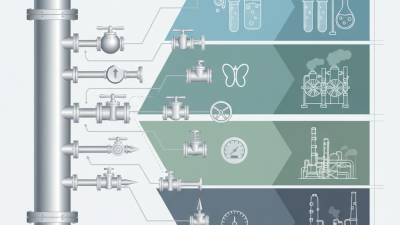
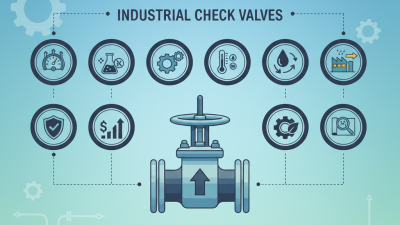
Stainless steel valves are selected by flow, pressure, temperature, and cleaning needs—not by material alone. Gate valves isolate pipelines, while globe valves regulate flow. Ball valves open quickly and suit many utility lines. Check valves help prevent reverse flow. In food processing, polished surfaces and cleanable designs matter; chemical plants may need alloys matched to corrosive media. A catalog can make selection look simpler than it is.
The Grand View Research Industrial Valves Market report estimated the global market at USD 79.4 billion in 2023. That figure covers industrial valves broadly, not stainless models alone. The World Stainless Association reported 58.4 million tonnes of global stainless steel production in 2023, showing the scale of the material supply behind equipment manufacturing. Stainless valves also serve water treatment, pharmaceuticals, marine systems, and energy facilities, though operating conditions differ sharply.
Tips: Check the fluid, chloride exposure, operating temperature, and cleaning method before comparing valve types. Ask for material certificates and pressure-test records. Then verify seat and seal compatibility. A stainless body does not guarantee every component resists corrosion. Small details matter. When service conditions are unclear, document assumptions and review them with a qualified engineer.
Compare manufacturers against the same valve specification, not polished catalog photos. Record body grade, pressure class, connection type, operating temperature, and required inspection level. Ask for material test certificates linked to heat numbers, plus pressure-test records showing dates and acceptance criteria. Check the procedure against the specified standard, such as ISO 5208. Ask for a sample traceability trail from raw material to finished valve. Numbers need context.
The International Stainless Steel Forum’s Stainless Steel in Figures 2024 reports 58.4 million tonnes of global stainless-steel melt-shop production in 2023. That signals a large upstream supply base, not consistent valve quality. Compare machining tolerances, casting inspection, surface finish, and documented nonconformance handling. Request a factory audit or a live production walkthrough; look for marked components and calibrated gauges, not just certificates on a wall. Compare lead times using the same order quantity and inspection scope. A candid limitation: paperwork can look complete while shop-floor controls vary. Treat missing records as a question to resolve, not proof of poor performance.
Use this evidence-based scorecard to compare manufacturers without relying on unsupported rankings. The suggested weights are a buyer's evaluation framework, not verified performance ratings for any specific company.
| Evaluation dimension | What to compare | Objective evidence or reference | Suggested weight |
|---|---|---|---|
| Material identity and traceability | Confirm the specified stainless-steel grade, product form, heat number, and traceability through production and testing. | Review material test certificates and markings. Common references include ASTM A351 for cast stainless-steel pressure-containing components and ASTM A182 for forged or rolled alloy and stainless-steel piping components. CF8M and F316 are commonly specified grades; confirm the exact specification for the application. | 20% |
| Design and pressure-temperature suitability | Check valve type, size range, pressure class, end connections, operating temperature, and the design standard stated for the product. | Compare the datasheet and drawings against the purchase specification. ASME B16.34 covers design, materials, dimensions, ratings, testing, and marking for many flanged, threaded, and welding-end valves. Verify that the selected valve and connection type fall within the cited standard's scope. | 15% |
| Manufacturing and quality controls | Assess inspection plans, process controls, nonconformance handling, calibration, and control of subcontracted processes. | Request a current quality-management-system certificate and verify its scope and validity with the issuing body. ISO 9001 certification indicates a quality-management system; it does not by itself certify a particular valve's design or performance. | 15% |
| Pressure and leakage testing | Check test types, acceptance criteria, test medium, records, and whether the offered inspection level matches the order. | API 598 specifies inspection and testing requirements for covered valve types. Request traceable test reports for the ordered valves and confirm the applicable standard and acceptance criteria in the contract. | 15% |
| Product and application coverage | Compare demonstrated capability for the required valve types, sizes, pressure classes, materials, actuation, and end connections. | Request product-specific drawings, bills of materials, technical datasheets, and documented references for comparable service. Relevant standards vary by valve type; for example, API 608 covers metal ball valves and API 609 covers butterfly valves within their stated scopes. | 10% |
| Certifications and special-service requirements | Confirm that required certificates, design approvals, and service-specific material controls apply to the exact product and manufacturing location. | Check certificate scope, product coverage, validity, and issuing body. For sour-service environments, determine whether NACE MR0175 / ISO 15156 requirements apply and verify the specified material and service conditions; do not treat a general certificate as proof of suitability. | 10% |
| Delivery, documentation, and support | Compare quoted lead time, spare-parts availability, drawing approval, packing, warranty terms, and response to technical questions. | Use written quotations, project schedules, sample document packages, warranty terms, and documented service procedures. Confirm delivery commitments and required documentation in the purchase order. | 10% |
| Total cost and commercial clarity | Compare like-for-like pricing, exclusions, tooling or inspection charges, payment terms, shipping basis, and lifecycle support costs. | Evaluate itemized quotations against the same technical specification and delivery terms. A lower purchase price alone does not establish lower lifecycle cost or equivalent compliance. | 5% |
Suggested use: Score each manufacturer from 1 to 5 for every dimension using documents and samples that can be independently checked. Multiply each score by its suggested weight, and shortlist suppliers only after confirming technical compliance and certificate validity.