Buying industrial ball valves is not simply a matter of choosing the lowest price or the largest connection size. A valve may look suitable on a supplier’s page, yet fail quickly when exposed to abrasive solids, high temperature, aggressive chemicals, or repeated cycling. The details matter: body material, seat design, pressure rating, bore size, stem construction, and actuator compatibility must match the actual service conditions. Even a small mismatch can create leakage, difficult operation, or costly production downtime.
Philip L. Skousen, author of the Valve Handbook, is often associated with this practical warning: “The right valve is selected by service, not by size alone.” That principle remains useful for industrial ball valves. Buyers should request pressure-temperature charts, material certificates, test records, and clear warranty terms. Ask how the valve performs after thousands of cycles, not only how it looks when new. Check whether the supplier understands your medium, pipeline layout, maintenance access, and shutdown procedures.
Do not trust impressive specifications alone.
A careful inspection should include thread quality, flange dimensions, packing adjustment, and internal finish. Consider spare parts availability too. A cheap valve can become expensive when its seat or stem is unavailable. Some purchasing teams overlook installation conditions, which is an uncomfortable but common mistake. Others specify stainless steel without confirming chloride exposure or chemical compatibility. This guide presents ten practical tips for buying industrial ball valves, while recognizing that no checklist replaces experienced engineering judgment, documented testing, and honest communication with the manufacturer.
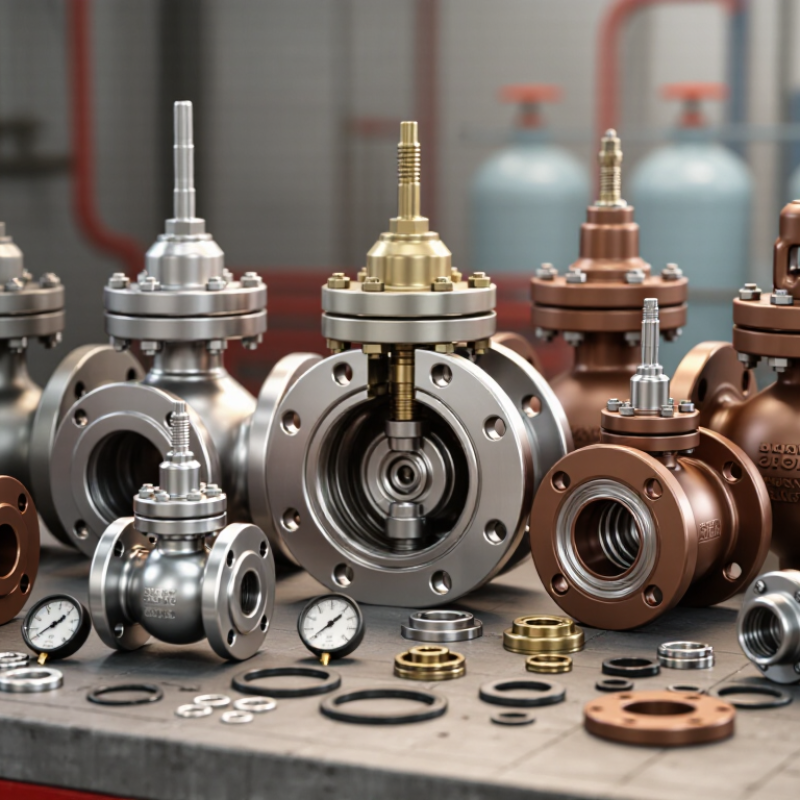
Define the Operating Requirements for Your Industrial Ball Valve
Before comparing industrial ball valves, document the real service conditions. Record media type, pressure, temperature, flow rate, pipe size, cycling frequency, and installation position. Specify normal and maximum values. A valve handling clean water may fail quickly in abrasive slurry. A spreadsheet helps, but it can hide a bad assumption.
The U.S. Department of Energy’s Improving Compressed Air System Performance sourcebook reports that leaks can waste 20–30% of compressor output. Therefore, confirm whether the valve must isolate, throttle, or support emergency shutdown. Throttling with an unsuitable ball valve can increase wear, noise, and energy loss. Check pressure drop at the actual flow rate, not only the line diameter. Select body, seat, and stem materials against corrosion, temperature, and solids. API 6D and ASME B16.34 provide useful requirements for pipeline and pressure-containing valve design. ISO 5208 supports pressure-testing decisions. Automation also needs careful definition. State the required fail position, actuator torque, signal type, response time, and available air or electrical supply. Field conditions are rarely perfect. Dirt, condensation, and irregular maintenance can change performance. That is why a slightly conservative torque margin may be wiser than a precise but fragile calculation.
Before selecting an industrial ball valve, confirm the required pressure class against the process design pressure and temperature. The chart shows indicative pressure ratings at approximately 38°C for common ASME flange classes. Actual allowable pressure depends on valve materials, temperature, end connections, and the applicable standard, so the manufacturer’s pressure-temperature table must always be checked.
10 Tips for Buying Industrial Ball Valves
Select the Right Valve Type, Size, and Connection Standard
Choosing an industrial ball valve starts with the process, not the catalog photograph. Identify the fluid, operating temperature, pressure, flow rate, and cycling frequency. A full-port valve reduces pressure loss in pipelines, while a reduced-port design may lower cost and weight. For frequent automation, check the actuator mounting pattern and available torque. Do not guess.
Valve materials must match the service conditions. Stainless steel can suit corrosive fluids, but seal materials also need careful review. A compatible body with an unsuitable seat can still fail early. In field inspections, I have seen valves selected by pipe diameter alone. That shortcut caused leakage and difficult maintenance. The wrong choice is often small.
Connection standards deserve equal attention. Confirm whether the line uses flanged, threaded, welded, or sanitary ends. For flanges, compare the pressure class, facing, bolt pattern, and dimensional standard, such as ASME B16.5. Threaded connections require matching thread forms, such as NPT, with correct sealing practice. Check end-to-end dimensions before ordering. One overlooked millimeter can delay installation. Request material certificates, pressure-test records, and clear inspection data. Verify the valve’s actual rating at the operating temperature, not only its room-temperature rating. Even experienced buyers should recheck the specification sheet.
| No. | Buying Dimension | What to Check | Typical Options or Standards | Practical Selection Guidance |
|---|---|---|---|---|
| 1 | Define the Service Medium | Identify the fluid, concentration, solids content, cleanliness, and chemical compatibility requirements. | Water, air, steam, hydrocarbons, corrosive chemicals, slurry, or sanitary fluids. | Confirm body, ball, stem, seat, and seal materials against the actual medium. Abrasive or particle-filled services may require a valve design specifically rated for solids. |
| 2 | Choose the Correct Ball Valve Type | Determine whether the application needs isolation, frequent cycling, maintenance access, or reduced pressure loss. | Floating ball, trunnion-mounted ball, full-port, reduced-port, one-piece, two-piece, or three-piece construction. | Floating designs are commonly used for smaller or moderate-pressure applications. Trunnion-mounted designs are generally selected for larger sizes, higher pressures, or lower operating torque. Use full-port designs when minimizing pressure drop is important. |
| 3 | Match the Pressure Class | Check maximum operating pressure, pressure surges, design pressure, and the pressure-temperature rating. | ASME Class 150, 300, 600, 900, 1500, and 2500; PN 10, PN 16, PN 25, PN 40, or higher where applicable. | Do not select a valve from pressure rating alone. Verify the rating at the actual operating temperature and confirm that the body, trim, seats, and end connections have compatible ratings. |
| 4 | Select the Nominal Size Carefully | Review required flow rate, allowable pressure drop, fluid velocity, and connected pipe size. | NPS ½ to NPS 48 or larger; metric designations such as DN 15, DN 25, DN 50, DN 100, and DN 1200. | The valve end size should normally match the pipeline connection, but the bore should be checked separately. Oversizing can reduce controllability and increase cost, while undersizing can increase pressure loss and velocity. |
| 5 | Verify the Connection Standard | Confirm flange dimensions, bolt-hole pattern, face-to-face length, pipe schedule, and installation orientation. | ASME B16.5, ASME B16.47, EN 1092-1, ASME B16.10, ASME B16.11, ISO 5211, NPT, BSP, socket weld, and butt weld connections. | Do not combine ASME and EN flanges without confirming dimensional compatibility. For threaded valves, specify the thread type and size. For welded valves, specify weld-end dimensions and the applicable piping specification. |
| 6 | Choose Body and Trim Materials | Evaluate corrosion resistance, erosion, temperature, pressure, and mechanical strength. | Carbon steel, stainless steel, ductile iron, alloy steel, nickel alloys, PTFE seats, reinforced polymer seats, and metal seats. | Stainless steel may suit many corrosive services, while carbon steel is often used for compatible non-corrosive or hydrocarbon applications. Metal seats are considered for higher temperatures or severe service, subject to leakage requirements. |
| 7 | Check Temperature and Seat Limits | Compare minimum and maximum process temperatures with the seat, stem seal, gasket, and body material limits. | PTFE-based seats for many moderate-temperature services; reinforced polymers or metal seats for selected higher-temperature applications. | The valve’s temperature range depends on the complete assembly, not only the body material. Request the manufacturer’s pressure-temperature chart and verify thermal cycling requirements. |
| 8 | Decide on Manual or Automated Operation | Determine cycle frequency, fail position, available utilities, torque requirements, and control-system interfaces. | Lever handle, gearbox, pneumatic actuator, electric actuator, hydraulic actuator, limit switch, solenoid valve, and positioner. | Use the valve’s breakaway, running, and end torque—not only nominal size—to select an actuator. Define fail-open, fail-closed, or fail-in-place requirements for automated systems. |
| 9 | Confirm Safety and Compliance Requirements | Identify fire-safe, fugitive-emission, anti-static, locking, double-block-and-bleed, or hazardous-area requirements. | API 607 or API 6FA for applicable fire testing; ISO 15848 for fugitive emissions; API 6D for applicable pipeline valves; ISO 5211 for actuator mounting. | Specify only the certifications required by the process, site, and jurisdiction. Confirm the exact edition, test scope, certificate coverage, and whether the certification applies to the complete valve assembly. |
| 10 | Review Testing, Delivery, and Maintenance Data | Request inspection records, pressure-test results, material certificates, spare-parts information, and maintenance instructions. | API 598, ISO 5208, EN 12266, hydrostatic shell testing, seat leakage testing, dimensional inspection, and material traceability documents. | Include required documents in the purchase specification. Check lead time, replacement-seat availability, maintenance access, storage conditions, warranty terms, and the valve’s complete bill of materials before approval. |
Buying an industrial ball valve is rarely just a size decision. Material selection should follow the fluid, pressure, temperature, and installation environment. Carbon steel suits many general services, while stainless steel offers stronger corrosion resistance. However, stainless steel is not automatically the safest option. Chlorides, acids, and abrasive particles can still cause damage.
The seat material deserves equal attention. Soft seats, such as PTFE-based compounds, often provide tight shutoff at moderate temperatures. Metal seats may handle higher heat, pressure cycling, or abrasive media better. Check the complete temperature range, not only the valve body rating. Seals and seats may reach their limits first. Pressure ratings also change with temperature. A valve rated for high pressure at room temperature may require derating in hot service. The details matter.
Ask for pressure-class data, temperature derating charts, material certificates, and test records. Confirm whether the rating covers the intended media and operating cycle. A valve facing frequent thermal shocks needs more than a generous headline rating. It needs compatible materials and verified testing. Real projects are messier than catalog tables. Site data may be incomplete, and that weakness should be acknowledged before purchase. A cautious engineer will verify fluid composition, pressure peaks, vacuum conditions, and emergency temperatures. The cheapest comparison can become expensive when one overlooked seal fails.
When buying an industrial ball valve, start with the actuator, not the catalog price. Match torque output to the valve’s breakaway torque, then add a documented safety margin. Pneumatic actuators suit frequent cycling and hazardous areas when correctly specified. Electric units offer precise positioning where compressed air is unavailable. Ask how the valve behaves after power or air failure. Fail-open, fail-closed, or fail-in-place choices can change process safety. Check mounting dimensions, cycle time, control signals, and manual override access. Keep it practical.
Sealing performance depends on more than the seat material. Confirm compatibility with fluid chemistry, temperature swings, pressure, solids, and cleaning agents. A valve handling abrasive slurry needs different consideration than one carrying dry nitrogen. Inspect stem seals, body gaskets, and fire-safe design documentation where relevant. Request pressure-test records and leakage classifications, not vague claims of “zero leakage.” Thermal cycling can expose weaknesses that a room-temperature test misses. I have seen valves pass initial testing yet require adjustment after repeated hot-cold cycles.
Maintenance needs should be visible before installation. Select valves with accessible grease points, replaceable seals, and clear service instructions. Record operating torque, cycle counts, and leakage observations during commissioning. A simple log often reveals rising friction before failure. Check actuator limit switches and position feedback at planned intervals. Do not over-grease; excess lubricant can attract dust or contaminate clean service. Test it under load. Reassess the maintenance schedule after the first operating season, especially when moisture, vibration, or unusual cycling appears. Ask for material certificates, test procedures, and spare-part availability from accountable suppliers.
Industrial ball valve purchases should begin with evidence, not a low quotation. Grand View Research estimates the global industrial valves market will continue expanding through 2030, driven by energy, water, and process industries. This growth also increases supplier choices and quality risks. Request material certificates, pressure-test records, heat numbers, and traceable inspection reports. A valve should match the pipeline’s pressure, temperature, media, and connection standard. Small mismatches cause large shutdowns.
Check relevant certifications carefully. ISO 9001 supports documented quality processes, but it does not prove every valve is suitable for your service. API 6D may apply to pipeline valves, while ASME B16.34 addresses pressure-temperature ratings and design requirements. Confirm the certificate’s scope, issuing body, and validity. Ask for independent test evidence when the application is critical. Paperwork can look perfect.
Supplier support affects total cost. A 2024 MarketsandMarkets report values the industrial valves market at tens of billions of dollars and identifies maintenance reliability as a major purchasing concern. Request installation guidance, spare-part availability, response times, and warranty terms. Compare energy loss, inspection labor, replacement frequency, and downtime, not only purchase price. I have seen teams overlook actuator compatibility until installation day. That mistake is costly. Build a lifecycle-cost sheet, then challenge its assumptions.