Blogs | Steelstrong Valves

Top China Trunnion Mounted Ball Valve Manufacturers

China has become a major manufacturing base for energy, petrochemical, and process-control equipment. Within this landscape, the trunnion mounted ball valve serves demanding pipelines where large diameters, high pressure, and reliable shutoff are essential. Its fixed stem design reduces operating torque and supports stable performance during repeated cycling. That matters in a crude-oil terminal, where a heavy valve may open against pressure while temperatures change across the line.

Industry reports show why supplier evaluation deserves care. Grand View Research has identified continued growth in the global industrial valves market, supported by oil and gas, water infrastructure, and chemical processing investment. MarketsandMarkets has also linked valve demand to pipeline expansion, LNG facilities, and industrial automation. Their market boundaries differ, however. The figures are not perfectly comparable. Buyers should treat forecasts as direction, not proof.

This guide examines top China trunnion mounted ball valve manufacturers through practical and technical criteria. These include pressure-class capability, material traceability, fire-safe design, low-emission packing, and documented testing. Relevant references may include API 6D, API 607, ISO 17292, and ASME B16.34, depending on the application and contract requirements. A credible manufacturer should provide hydrostatic and pneumatic test records, inspection plans, dimensional reports, and clear warranty terms. Factory experience matters, too. A polished website cannot replace witnessed testing or consistent machining quality.

Some suppliers excel in standard carbon-steel valves. Others perform better with cryogenic service, sour gas, or custom actuation. This distinction is easy to miss. The following overview helps engineers, distributors, and project buyers compare Chinese manufacturers with greater confidence, while recognizing that final selection still requires application-specific review.
Top China Trunnion Mounted Ball Valve Manufacturers

Trunnion Mounted Ball Valves: Design, Function, and Key Applications

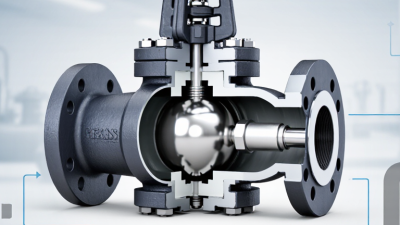
A trunnion mounted ball valve uses a fixed lower and upper stem to support the ball. This structure reduces operating torque, especially in large-bore pipelines. The seat rings move toward the ball under line pressure. They create a tight seal with less stem load. Many designs also provide double isolation and cavity pressure relief. These features matter when operators handle gas, crude oil, water, or corrosive process fluids.

Grand View Research reported that the global industrial valves market was valued at approximately USD 77.5 billion in 2023. Its analysis projects continued growth through 2030, driven by energy, water, and chemical infrastructure. Trunnion designs suit high-pressure transmission lines and storage terminals. They also support emergency shutdown systems where rapid, dependable isolation is essential. Field experience shows that incorrect sizing can increase torque and shorten seat life. The design is strong, but not maintenance-free.

Tips: Check pressure class, bore size, temperature range, and media compatibility before selection. Request fire-safe and fugitive-emission test records when the service demands them. Inspect sealing surfaces for scratches, trapped debris, and uneven wear. ISO 14313 and API 6D offer useful technical references for pipeline valve design. However, standards cannot replace site-specific engineering. A valve may pass factory testing yet perform poorly after careless installation.

China’s Manufacturing Landscape for Trunnion Mounted Ball Valves

Top China Trunnion Mounted Ball Valve Manufacturers

China’s manufacturing landscape for trunnion mounted ball valves is expanding with energy, chemical, and pipeline investment. Grand View Research estimates the global industrial valves market reached about USD 76 billion in 2023. Its forecast also indicates steady growth through 2030. This demand encourages Chinese factories to improve machining accuracy, pressure testing, and material traceability.

Production often combines automated CNC machining with manual inspection. Large-diameter bodies may require extensive forging, heat treatment, and ultrasonic testing. Trunnion designs reduce operating torque and support stable sealing under high pressure. Manufacturers commonly work against API 6D, ISO 14313, and fire-safe requirements. For sour-service projects, material selection must also address NACE MR0175/ISO 15156 conditions.

The landscape is not perfectly uniform. Some factories provide detailed inspection records, while others still depend heavily on final-stage checks. That difference matters. A 2024 valve market analysis from MarketsandMarkets describes infrastructure and energy projects as important demand drivers for industrial valves. Buyers should therefore examine pressure-test procedures, coating thickness, fugitive-emission controls, and spare-part support. A practical factory audit should include witnessed testing, not only document review. Small gaps can become expensive later. China’s manufacturing strength is real, but consistency still requires careful technical verification.

How to Evaluate Leading Chinese Valve Manufacturers

Evaluating leading Chinese trunnion mounted ball valve manufacturers requires more than comparing prices. Grand View Research valued the global industrial valves market at about USD 78 billion in 2023. Its 2024 report also projects steady growth through 2030. This demand increases supplier competition, but it can hide uneven quality. A serious evaluation starts with API 6D certification, ISO 9001 procedures, and traceable material records for bodies, stems, seats, and bolts.

Ask for recent pressure-test reports, not sample certificates. The records should show hydrostatic testing, gas-shell testing, seat leakage results, and test pressure. For a large valve, request photographs of the serial plate, packing area, and internal coating. Factory audits should examine CNC machining, welding controls, calibration dates, and nonconformance records. The International Organization for Standardization reports that ISO 9001 remains widely adopted across global manufacturing, yet certification alone does not prove process discipline.

Reviewers should also compare lead times, spare-part response, actuator compatibility, and export packaging. A useful supplier can explain why a double-piston effect design suits a pipeline application. They should also identify when it does not. That honesty matters. My own evaluation would include a witnessed factory test and one independent inspection before bulk approval. A spreadsheet cannot reveal every weakness. Sometimes, the quiet details matter most.

Top China Trunnion Mounted Ball Valve Manufacturers - How to Evaluate Leading Chinese Valve Manufacturers

Evaluation Dimension Industry-Based Benchmark Technical Details to Review Evidence to Request Importance
Design Configuration Full-bore, two-piece or three-piece trunnion-mounted construction Confirm whether the valve uses a fixed or removable trunnion, separate stem and ball support, anti-blowout stem, and fire-safe design. General arrangement drawings, sectional drawings, design calculations, and product data sheets. High
Applicable Design Standards API 6D, ASME B16.34, ISO 17292, or an equivalent project specification Check that the selected standard matches the pipeline, oil and gas, petrochemical, or power application. Design standard declaration, compliance matrix, and current edition references. High
Nominal Size Range Common industrial ranges from NPS 2 to NPS 56, subject to pressure class and design Verify actual size capability, bore type, face-to-face dimensions, end connections, and dimensional compliance with ASME B16.10 or the specified standard. Size and pressure-class catalog, dimensional drawings, and representative inspection reports. High
Pressure Class ASME Class 150, 300, 600, 900, 1500, and 2500 are widely used industrial classes Review pressure-temperature ratings, shell thickness, design temperature, and rating reductions for the selected material. Pressure-temperature charts, design calculations, and rating tables. High
Body and Trim Materials Common materials include ASTM A216 WCB, ASTM A352 LCB, ASTM A351 CF8M, and forged stainless steel grades Match body, ball, stem, seats, and bolting materials to temperature, corrosion, sour-service, and fluid compatibility requirements. Material test certificates, heat numbers, chemical analysis, and mechanical test results. High
Sour-Service Suitability Compliance with NACE MR0175/ISO 15156 when hydrogen sulfide exposure is specified Check material hardness, heat treatment, environmental limits, metallic and non-metallic material restrictions, and traceability. NACE compliance statement, hardness records, heat-treatment charts, and material certificates. High
Fire-Safe Performance API 6FA, API 607, or ISO 10497 certification according to valve construction Verify external leakage control, seat leakage after fire exposure, stem sealing performance, and test configuration. Fire-safe test certificate issued for the relevant size, pressure class, material, and seat design. High
Pressure and Leakage Testing Hydrostatic shell and seat testing in accordance with API 6D, ISO 5208, or the specified standard Review test pressure, holding time, allowable leakage rate, test medium, double-block-and-bleed functionality, and cavity relief performance. Factory acceptance test reports, calibrated gauge records, and signed inspection documents. High
Seat Design Soft-seat, metal-seat, or metal-seated fire-safe configurations selected for service conditions Evaluate seat material, self-relieving or cavity-relief design, low-temperature capability, abrasion resistance, and compatibility with the process medium. Seat specifications, operating-temperature range, leakage test results, and application references without confidential customer data. High
Anti-Static and Anti-Blowout Features Required for many hydrocarbon and hazardous-service applications Confirm electrical continuity between stem, ball, and body, as well as internal stem retention under pressure. Design drawings, continuity test records, and functional inspection procedures. Medium
Actuator and Automation Support Pneumatic, hydraulic, electric, or manual actuation sized to the maximum breakaway torque Check torque calculations, safety factor, fail-open or fail-closed action, emergency shutdown requirements, and accessory compatibility. Torque curves, actuator sizing sheets, control-valve data, and integrated functional test records. High
Quality Management ISO 9001-certified quality management system with documented manufacturing controls Assess incoming material inspection, welding control, machining control, assembly procedures, nonconformance handling, and corrective actions. Valid certificate, quality manual extract, inspection and test plan, and recent audit records. High
Special Process Control Controlled procedures for casting, forging, welding, heat treatment, coating, and non-destructive testing Verify qualified welding procedures, personnel qualifications, radiographic or ultrasonic testing, magnetic-particle or dye-penetrant testing, and coating controls. WPS/PQR documents, operator qualifications, NDE reports, heat-treatment records, and coating inspection reports. High
Traceability Full material and component traceability from raw material through final inspection Confirm heat-number transfer, identification plates, serial-number control, component records, and document retention periods. Material traceability map, nameplate samples, manufacturing record book, and sample data book. High
Inspection and Certification Inspection support for purchaser, third-party, and project-specific requirements Review hold points, witness points, dimensional inspection, functional testing, and final documentation requirements. Inspection and test plan, inspection release note, third-party reports, and certificate of conformity. High
Delivery and Documentation Complete documentation package supplied before shipment or with the final release Check packing standards, preservation, export marking, spare-parts lists, installation instructions, operation manuals, and as-built drawings. Document register, packing specification, sample operation manual, and delivery schedule. Medium
After-Sales Capability Documented warranty, technical support, spare-parts availability, and service response process Evaluate response time, troubleshooting support, actuator service capability, replacement-seat availability, and field-service coverage. Warranty terms, service procedure, spare-parts policy, and anonymized service performance records. Medium
Commercial Evaluation Total cost of ownership rather than purchase price alone Compare valve price, actuator package, testing, inspection, certification, packaging, logistics, spare parts, maintenance, and expected service life. Itemized quotation, Incoterms, payment terms, warranty exclusions, and lifecycle-cost assumptions. High

Quality Standards, Certifications, and Production Capabilities

Top China Trunnion Mounted Ball Valve Manufacturers

Quality standards reveal more than factory size. Serious manufacturers should provide material certificates, heat-number traceability, and documented inspection plans. API 6D remains a key benchmark for pipeline valves. ISO 9001 supports controlled production, but certification alone is not proof of consistent quality. Buyers should review recent test records, not only framed certificates.

The International Energy Agency’s Oil 2024 report expects global oil demand to increase by 2.5 million barrels per day between 2023 and 2030. The IGU World LNG Report 2024 recorded global LNG trade at about 404.5 million tonnes in 2023. These figures support continued demand for reliable pipeline and cryogenic equipment. Production capability should include CNC machining, automated welding control, pressure testing, and functional testing under realistic conditions. API 6FA fire testing and ISO 15848-1 fugitive-emission testing add valuable evidence. Some factories claim broad capabilities, yet outsource critical processes. That deserves closer questioning.

Tips: Ask for hydrostatic and pneumatic test pressures, inspection frequency, coating thickness, and low-temperature impact results. Confirm whether tests are witnessed by an independent inspector. Small details matter. A strong supplier should also explain deviations openly, because no production system is perfect. A polished datasheet cannot replace traceability, repeatable testing, and experienced technical staff.

Top China Trunnion Mounted Ball Valve Manufacturers: Quality Standards, Certifications, and Production Capabilities

Reference pressure ratings commonly used when evaluating industrial trunnion-mounted ball valves. The figures represent ASME Class pressure ratings at 38°C for standard carbon-steel reference conditions and are not company-specific performance claims.

Quality reviews typically consider API 6D design and testing, ASME B16.34 pressure ratings, ISO 5208 pressure testing, API 607 fire-safe testing, ISO 15848-1 fugitive-emission performance, material traceability, welding controls, and documented factory acceptance testing. Pressure values shown are reference ratings and must be verified against the applicable material group and operating temperature.

Selecting the Right Chinese Manufacturer for Your Project

Selecting a Chinese trunnion mounted ball valve manufacturer requires more than comparing quotations. A 2024 Fortune Business Insights report valued the global industrial valves market at about USD 78.36 billion in 2023. This scale increases supplier choice, but it also makes verification essential.

Start with the project conditions.

Confirm pressure class, valve size, temperature, media, fire-safe requirements, and corrosion exposure. For pipeline service, request evidence of API 6D compliance and documented hydrostatic and seat testing. ISO 5208 test records should show pressure, duration, and leakage results. Ask for evidence.

A reliable factory should provide heat numbers, material certificates, welding procedures, and final inspection reports. For sour service, check compliance with NACE MR0175 or ISO 15156. For automated valves, verify ISO 5211 mounting dimensions and actual actuator torque calculations. One useful factory-audit detail is traceability: the serial number on the valve should match the nameplate, test report, and packing list. That sounds basic. It is often missed.

Request sample photographs of trunnion bearings, stem sealing, cavity relief, and emergency sealant fittings. A video call can reveal machining, assembly, and storage conditions, although it cannot replace an independent audit. Consider production capacity carefully; a large catalog does not prove stable quality. Factory experience with similar sizes matters more than a polished website. I would also allow time for an uncomfortable question: what happens when a test fails? A manufacturer’s corrective-action records may reveal more than its sales presentation.