
What Is the Best China Floating Ball Valve?
What is the best China floating ball valve? The answer depends on the application, pressure rating, media, temperature, and service environment. A valve for clean water may fail quickly in abrasive slurry. A model designed for low-pressure air may not suit a high-temperature chemical line. The “best” choice is rarely the cheapest one.
In practical evaluations, engineers inspect more than the body material. They review pressure-test records, seat performance, stem design, surface finish, and traceability. Stainless steel, carbon steel, and special alloys each serve different operating conditions. The ball should rotate smoothly, without excessive torque or visible scoring. The stem seal also deserves close attention. Small leakage can become a serious maintenance problem.
Look beyond the catalog.
Reliable Chinese manufacturers usually provide dimensional drawings, material certificates, testing procedures, and clear warranty terms. Standards such as API 6D, ISO 5208, and ASME requirements may matter, depending on the project. However, certification claims should be verified through current documents and independent inspection when necessary. Marketing language is not proof.
This guide compares important factors behind a dependable floating ball valve. It considers manufacturing experience, quality control, customization, delivery consistency, and after-sales support. Product photographs can help, but they cannot replace inspection records or performance data. Some comparisons may still simplify complex engineering decisions. That limitation deserves recognition.
A thoughtful selection balances cost, reliability, service life, and technical support. The right supplier should explain weaknesses, not only promote strengths. That is where trust begins.
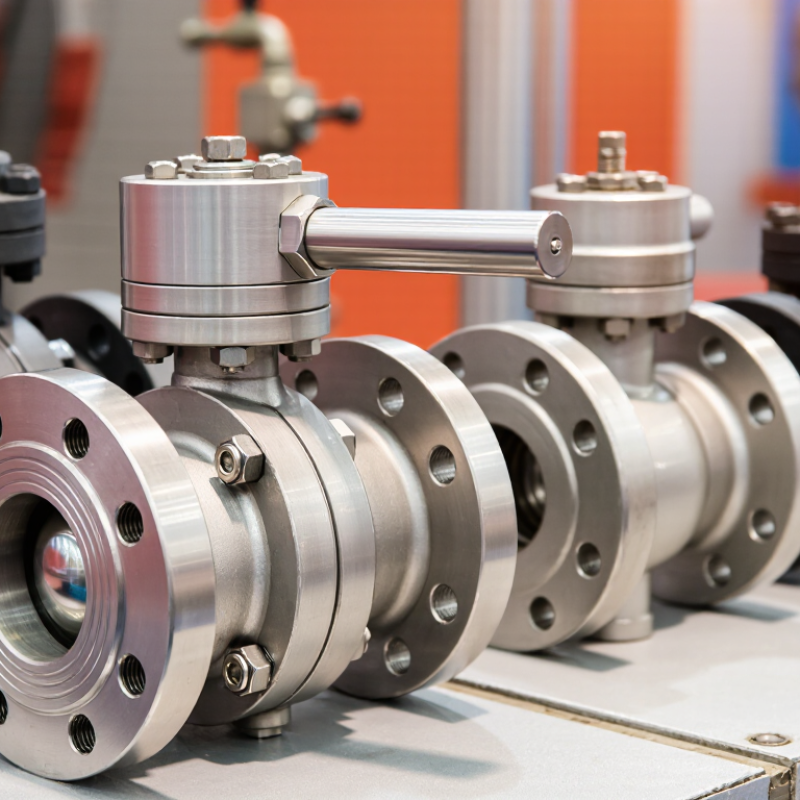
What Is a China Floating Ball Valve?
A China floating ball valve is an isolation valve manufactured in China with a ball that moves slightly inside the body. Unlike a trunnion-mounted design, the line pressure pushes the floating ball toward the downstream seat. This movement creates a tight seal around the flow passage. When the handle turns 90 degrees, the ball opens or blocks the medium. Simple operation. Fast shutoff.
Its body may use stainless steel, carbon steel, or other suitable alloys. Seat materials must match the temperature, pressure, and fluid conditions. For water service, common polymer seats may perform well. Hot oil, abrasive slurry, or corrosive chemicals require more careful material selection. A valve size alone does not determine performance. Wall thickness, stem design, seat quality, machining accuracy, and pressure testing also matter.
In practical inspections, I would check the nameplate, pressure rating, bore size, flange dimensions, and test records. The ball should turn smoothly without excessive force. The stem should not show leakage after repeated cycling. Do not rely only on a low purchase price. That approach can fail.
Manufacturing quality can vary between suppliers, even within the same region. This is where my earlier assumption might be too simple: country of origin does not prove quality by itself. Verified drawings, traceable materials, documented tests, and consistent inspection provide stronger evidence. A suitable China floating ball valve is selected for the actual service, not just its appearance or quoted cost.
What Is the Best China Floating Ball Valve? - What Is a China Floating Ball Valve?
| Evaluation Dimension | Common Option or Specification | What It Means | Selection Guidance |
|---|---|---|---|
| Valve design | Floating ball, typically two-piece or three-piece body | The ball is not fixed on a trunnion. Line pressure moves it slightly toward the downstream seat, helping form the seal. | Suitable for many general shut-off duties. Confirm the valve design and pressure-temperature rating for the actual service. |
| Typical size range | Often used in small and medium nominal pipe sizes; available ranges vary by design and manufacturer. | Floating designs are commonly selected where a compact quarter-turn valve is needed. | Check the stated nominal size, end connection, bore, and face-to-face dimensions against the piping layout. |
| Pressure class | Commonly specified by ASME Class, such as Class 150 or Class 300, where applicable. | Class is a pressure-temperature rating designation, not a single allowable pressure at every temperature. | Verify the applicable rating table for the body material, operating temperature, and governing standard. |
| Body material | Carbon steel, stainless steel, or other materials specified for the service | Material selection affects strength, corrosion resistance, temperature suitability, and compatibility with the process fluid. | For example, ASTM A216 WCB is a common cast carbon-steel body material; ASTM A351 CF8M is a common cast stainless-steel material. Confirm the exact grade and fluid compatibility. |
| Ball and stem materials | Stainless steel is commonly used; alloys may be specified for particular services. | These components must withstand the fluid, operating conditions, and expected wear. | Request material specifications and any coating or surface-treatment details where corrosion, erosion, or contamination is a concern. |
| Seat material | PTFE, reinforced PTFE, or other polymer seats; PEEK may be used for some higher-temperature or demanding applications. | Seat material influences sealing performance, temperature limits, chemical compatibility, and operating torque. | Check the seat manufacturer's pressure-temperature limits and compatibility with the process fluid; do not select by material name alone. |
| Port configuration | Full bore or reduced bore | A full-bore valve has a flow passage closer to the connected pipe's internal diameter; a reduced-bore valve has a smaller passage. | Choose full bore when low flow restriction or passage of cleaning tools is important. Confirm dimensions and flow requirements. |
| End connections | Flanged, threaded, socket-weld, or butt-weld ends, depending on design | The connection must match the piping system and applicable dimensional standard. | Specify the connection standard, size, pressure class, and facing or thread details clearly. |
| Operation | Manual lever or gear; pneumatic or electric actuation may also be available. | Quarter-turn operation opens or closes the valve. Actuator sizing depends on required torque and operating conditions. | For automation, confirm fail position, supply requirements, control signals, and actuator torque at the minimum available pressure. |
| Design and testing references | API 608 or ISO 17292 may apply to metal ball valves; API 598 is commonly used for valve inspection and testing. | Applicable standards depend on valve type, size, rating, and project requirements. | Ask which editions and test requirements apply, and verify that they match the purchase specification and local regulations. |
| Best-fit application | On/off isolation in compatible liquid or gas service | Floating ball valves are generally intended for shut-off rather than continuous throttling. | For frequent throttling, severe service, solids, or demanding leakage requirements, assess whether another valve design is more appropriate. |
| Practical purchasing checks | Datasheet, material certificates, pressure-temperature ratings, test records, and traceability documents | These documents help establish whether the supplied valve meets the specified design and service requirements. | Compare complete specifications and documentation rather than choosing solely by origin or price. |
Selection note: There is no single “best” floating ball valve for every application. The appropriate choice depends on pressure, temperature, fluid compatibility, size, connection, operating method, and required standards. Confirm the final selection with the project specification and the valve supplier’s certified data.
Related Posts
-

2026 Best Floating Ball Valve Guide for Global Buyers?
-

What is the Difference Between Ball Valve and Globe Valve?
-
2026 Best Globe Valve Manufacturers for Global Buyers
-
Top 10 China Ball Valves What Buyers Need to Know
-
Understanding the Benefits of Using Ball Check Valves in Fluid Control Systems
-
What to Know About 2026 Top Trends in Trunnion Ball Valve Technology?