What is the Difference Between Ball Valve and Globe Valve?
Understanding the difference between a ball valve and a globe valve is crucial for effective fluid control in various applications. Both types of valves serve specific purposes in industries such as oil and gas, water supply, and HVAC systems. However, their design and functionality are distinct.
A ball valve features a spherical closure element that allows for quick on-off control. It is typically more efficient and requires less force to operate. In contrast, a globe valve utilizes a movable disk to throttle flow. While it offers excellent control over fluid flow, it is less efficient compared to a ball valve.
Choosing between a ball valve and a globe valve requires careful consideration. Factors such as pressure drop, flow rate, and installation space come into play. Understanding these differences not only aids in correct selection but also enhances operational efficiency. The nuances of ball valve globe valve comparisons reflect the importance of precision in fluid management.
Difference in Design and Structure of Ball Valve and Globe Valve
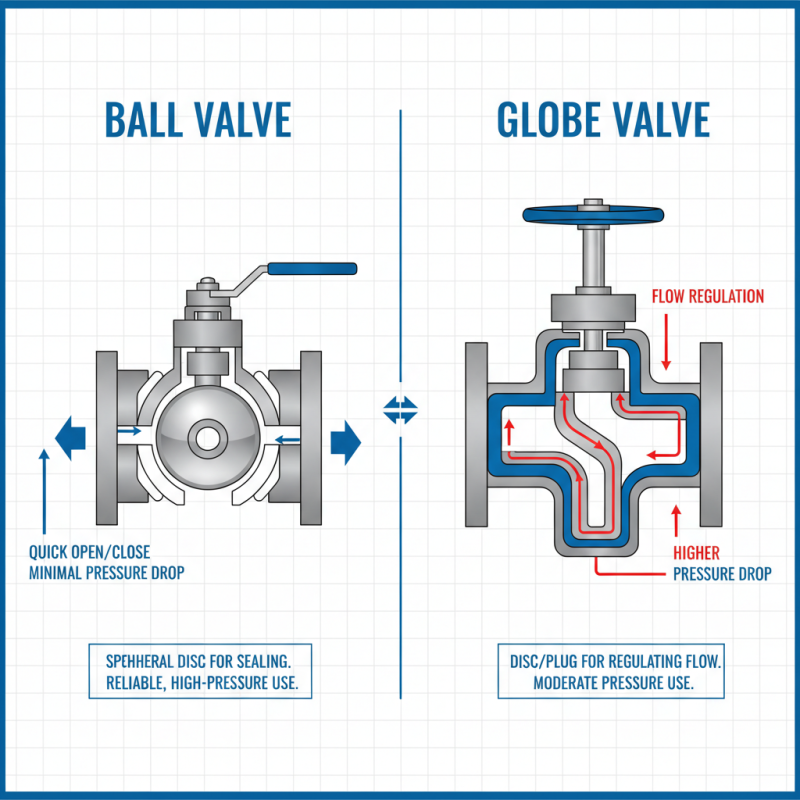
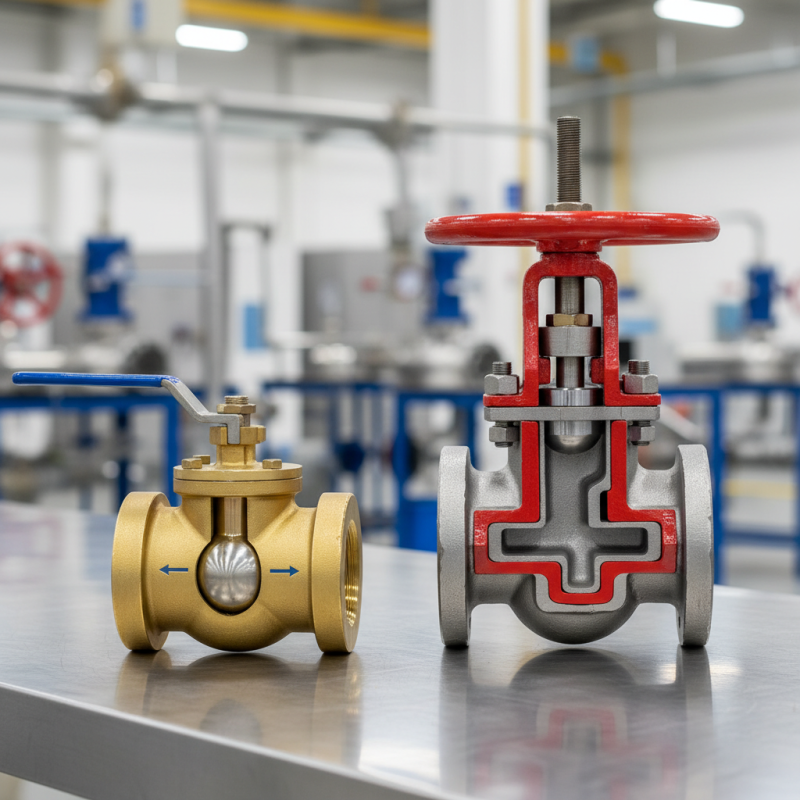
When comparing the ball valve and globe valve, the differences in design and structure reveal their unique functionalities. A ball valve uses a spherical disc for sealing and is known for its quick opening and closing features. This design allows for minimum pressure drop across the valve. Reports indicate that ball valves can retain a tight seal even after years of usage, making them a reliable choice in high-pressure applications.
On the other hand, globe valves feature a linear motion mechanism. The structure of a globe valve consists of a movable disk and a stationary ring seat. This design is tailored for precise throttling, which allows for better flow control. Globe valves tend to have higher pressure drops than ball valves. In fact, industry reports suggest that their pressure drop can be 30% more than ball valves under similar conditions.
**Tip:** When deciding between these two valves, assess the application's pressure requirements and flow characteristics. For high-flow, quick shut-off needs, ball valves are preferable. For accurate flow regulation, globe valves excel. Remember, both valves serve distinct purposes, so understanding their design can significantly impact operational efficiency.
Functionality Comparison: How Ball and Globe Valves Operate Differently
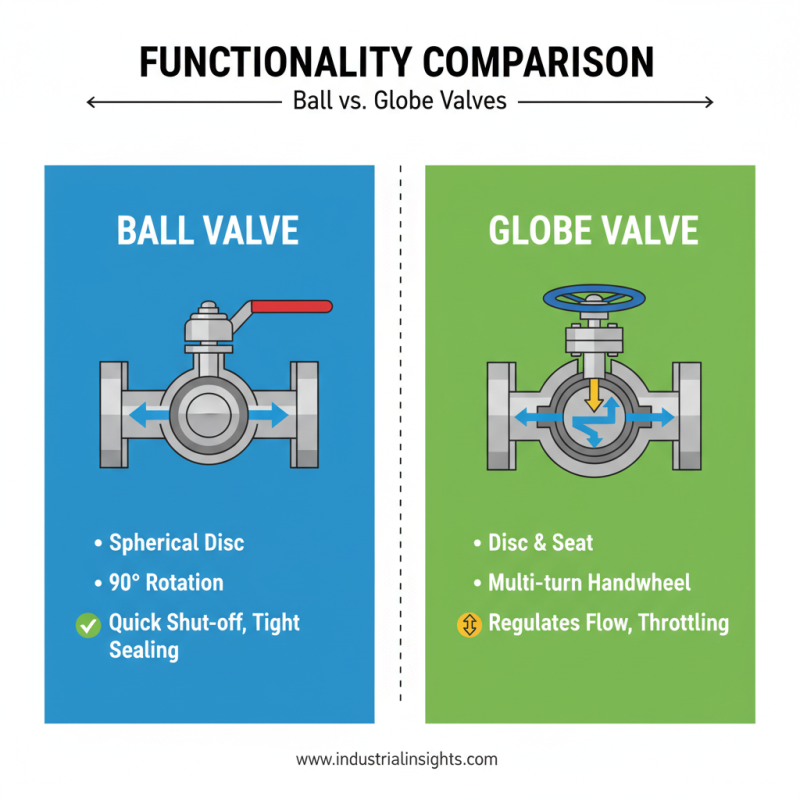
When comparing ball valves and globe valves, functionality is crucial. Ball valves utilize a spherical disc to control the flow. This design allows for quick opening and closing, typically with a 90-degree rotation. They excel in applications requiring tight sealing and quick shut-off.
On the other hand, globe valves employ a linear motion. The flow is controlled by lifting a disk from the seat, making them ideal for throttling. Their design results in higher pressure drops. This means they are better for regulating flow rather than simply turning it on or off.
**Tip:** When selecting a valve, consider the specific application. Ball valves are great for quick switching, while globe valves can fine-tune flow.
One might think that ball valves are always preferable, but their quick operation may not be suitable for all situations. Globe valves, though slower, provide better control in some cases. It’s essential to evaluate your project needs carefully. Remember, the right valve enhances system efficiency significantly.
Flow Characteristics: Assessing Flow Resistance and Efficiency
When comparing ball valves and globe valves, flow characteristics play a crucial role in assessing performance and efficiency.
Ball valves, known for their low flow resistance, typically offer a better flow rate. According to industry studies, ball valves can provide up to 70% lower pressure drop than globe valves. This feature makes them ideal for applications requiring quick shut-off and minimal turbulence.
In contrast,
globe valves are preferred for throttling. They feature a restrictive design that inherently increases flow resistance. Research indicates that globe valves can cause a pressure drop of around 50% more than ball valves at similar flow rates. This can lead to energy inefficiency in systems where flow needs to be controlled but not significantly restricted.
Engineers must weigh these factors when selecting between the two. While ball valves are advantageous for rapid flow, globe valves excel in precise control. Some studies highlight that over 30% of flow systems may be misconfigured due to poor valve selection. Careful evaluation of specific application needs is essential for optimal system efficiency.
Applications and Industry Usage: When to Choose Each Valve Type
Ball valves and globe valves serve critical functions in various applications. Understanding their differences is key to selecting the right type for specific needs. Ball valves are ideal for on/off control. They offer minimal resistance and require little space. This makes them suitable for situations where quick shut-off is necessary. They are commonly used in water supply systems and gas pipelines.
Globe valves, on the other hand, provide excellent throttling capabilities. They have a more complex design. This design allows for better flow regulation. They are often used in steam and fuel oil applications. However, they tend to create higher pressure drops. Consider the fluid type and required control level before making a choice.
**Tips:**
Always assess the operating pressure and temperature. This ensures you select a valve that matches your application. Think about maintenance needs as well. Ball valves usually require less upkeep than globe valves. For unique applications, consult with a fluid system expert. Their insights can help prevent costly mistakes.
Choosing the wrong valve can lead to inefficiencies. Evaluate how often flow regulation is needed. If regular adjustment is necessary, a globe valve may be preferable. Understand the specific requirements of your industry. Each sector, from food processing to petrochemical, has unique needs. Make informed decisions to enhance system performance.
Performance Metrics: Durability, Maintenance, and Lifespan Considerations
When comparing ball valves and globe valves, performance metrics like durability, maintenance, and lifespan are crucial. Ball valves typically have a longer lifespan due to their simpler design and fewer moving parts. Reports indicate that a well-maintained ball valve can last over 30 years, whereas globe valves may operate reliably for about 15 to 20 years. This difference is mainly due to the ball valve's efficient sealing mechanism, which reduces wear over time.
Maintenance is another critical factor. Ball valves require less frequent maintenance. Studies show that routine inspections every two to three years suffice. In contrast, globe valves often need more attention. They can face issues like seat wear and valve leakage, which might require annual checks. This maintenance can become costly, especially in larger systems.
Tip: Regular maintenance extends the life of your valves. Use leak detection methods to prevent potential failures.
In terms of durability, exposure to harsh environments can impact both valve types. The
materials used in their construction are essential. While brass and stainless steel are common, the specific application may require specialized materials. Relying solely on material specifications without considering environmental factors can lead to
premature failure.
Tip: Choose materials based on specific environmental conditions. It can make a significant difference in performance.