Blogs | Steelstrong Valves

What Are the Types of Industrial Valves?

Industrial valves control, isolate, redirect, or regulate fluids across demanding industrial systems. They appear in refineries, water-treatment plants, power stations, chemical facilities, and manufacturing lines. Each valve type responds differently to pressure, temperature, flow speed, and maintenance conditions. A gate valve, for example, usually provides straight-through isolation, while a globe valve offers more controlled throttling. Ball and butterfly valves can support fast shutoff, but their performance depends on design, materials, and operating limits.

This guide examines the main types of industrial valves and explains where each one commonly fits. It considers gate, globe, ball, butterfly, check, plug, diaphragm, and safety valves. Practical details matter. A valve installed near a vibrating pump may need different support than one serving a clean-water line. Corrosive media may require carefully selected alloys, linings, or seals. Small errors can become expensive leaks.

There is no universal “best” valve.

Selection should follow verified operating data, manufacturer documentation, and qualified engineering review. Industry standards provide useful reference points, yet local conditions can expose weaknesses that catalogs do not show. Maintenance teams often notice these issues first, such as stiff handwheels, damaged seats, or unusual pressure drops. This article also recognizes an important limitation: valve categories overlap, and real systems may require customized designs. Reliable decisions come from matching valve function with the complete service environment, not from choosing by name alone.
What Are the Types of Industrial Valves?

Valve Classification by Operating Principle

What Are the Types of Industrial Valves?

Valve Classification by Operating Principle

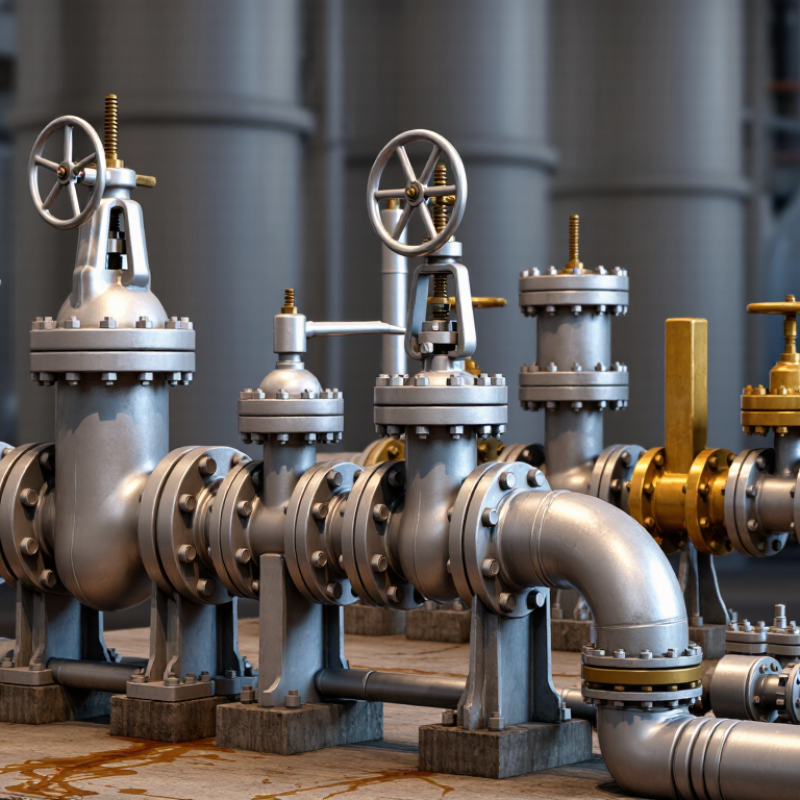
Industrial valves are best classified by how they control flow. Linear-motion valves move a closure element along a straight path. Gate valves offer low resistance when fully open, while globe valves provide more precise throttling. Diaphragm valves isolate the fluid from moving parts, which helps with corrosive or contaminated media. Rotary valves use a turning element. Ball, butterfly, and plug valves rotate through 90 degrees, making them compact and quick to operate. Check valves work automatically, opening with forward pressure and closing during reverse flow. Pressure-relief valves respond when system pressure exceeds a set limit.

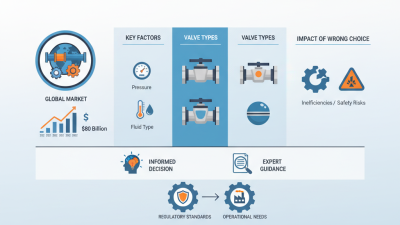
According to Grand View Research, the global industrial valves market was valued at about USD 78.6 billion in 2023. Its report projects continued growth through 2030, driven by water treatment, energy, and process industries. That growth does not make every valve suitable for every line. In field inspections, a valve can appear correctly sized yet fail because of cavitation, poor material selection, or excessive cycling. Classification is useful, but it is not the whole decision. A clean chart still hides trade-offs.

Tips: Match the operating principle to the duty cycle. Use linear valves for controlled throttling and rotary valves where fast isolation matters. Check pressure, temperature, media chemistry, and actuator torque. Review the latest test data and maintenance history before approval. Small errors become expensive leaks.

Industrial Valve Types by Flow-Control Function

Industrial valves are selected by the job they perform in a process line. Their flow-control function often matters more than their shape. Isolation valves start or stop flow completely. Gate, ball, butterfly, and plug valves commonly serve this purpose. They should operate fully open or fully closed. Using them for constant throttling can damage sealing surfaces and create unstable flow.

Control valves regulate flow, pressure, temperature, or liquid level. A partially open valve creates resistance, allowing operators or automated systems to adjust process conditions. Globe valves can provide precise throttling, while some butterfly valves suit larger pipes and moderate control duties. Engineers should check the expected flow rate, pressure drop, temperature, and fluid properties. Small details matter. A corrosive liquid may require different internal materials than clean water.

Check valves perform non-return control. They close when flow reverses, protecting pumps and reducing pipeline shock. Pressure-relief valves open when pressure exceeds a defined limit. Their settings require careful testing and accurate documentation. Drain valves and sampling valves support maintenance and process monitoring. They may appear minor, but poor access can delay inspections and increase exposure risks. In practice, valve selection is not always perfect on the first attempt. A design based only on pipe size can overlook noise, cavitation, leakage, or difficult servicing. Experienced teams review operating records and installation conditions before final approval.

What Are the Types of Industrial Valves? - Industrial Valve Types by Flow-Control Function

Valve Type Primary Flow-Control Function Typical Flow Path Main Operating Principle Typical Applications Key Advantages Important Limitations
Gate Valve Isolation and on/off service Generally straight-through when fully open A gate moves vertically or axially into the flow path to stop or permit flow. Water transmission, pipelines, utilities, and process piping Low pressure loss when fully open; suitable for large line sizes Slow operation; not recommended for routine throttling because partial opening can cause vibration and seat damage
Globe Valve Throttling, regulating, and isolation Changes direction through the valve body A disc or plug moves toward or away from a stationary seat to vary the opening. Steam, cooling water, fuel systems, and process control lines Good control accuracy; robust shutoff capability Higher pressure drop than straight-through valve designs; larger actuating force may be required
Ball Valve Quarter-turn isolation and on/off control Straight-through bore in the open position A drilled spherical ball rotates, usually through 90 degrees, to align or block the flow passage. Hydrocarbon, chemical, compressed-air, and utility systems Fast operation; compact design; low pressure loss; tight shutoff is available Standard designs are generally better for on/off service than continuous throttling; solids can damage seats
Butterfly Valve Isolation and moderate throttling Flow passes around a rotating disc A disc rotates around a shaft, normally through approximately 90 degrees, to regulate the opening. Large-diameter water, air, HVAC, wastewater, and process lines Lightweight; compact face-to-face dimension; economical for large line sizes The disc remains in the flow path; pressure drop and control performance depend strongly on disc design and position
Check Valve Automatic non-return and backflow prevention One-directional flow Flow pressure opens the closure member; reverse flow forces it closed. Pump discharge lines, compressors, boiler systems, and pipelines Operates automatically without an external actuator; protects equipment from reverse flow Can slam or cause water hammer if incorrectly selected; cannot provide manual flow isolation
Diaphragm Valve Isolation, throttling, and hygienic flow control Flow is controlled beneath a flexible diaphragm A flexible diaphragm presses against a weir or seat to close or restrict the passage. Corrosive chemicals, pharmaceuticals, food processing, and water treatment Good separation between the actuator and process fluid; suitable for corrosive or contaminated fluids Diaphragm wear limits service life; pressure and temperature ratings are often more restricted than metal-seated designs
Pinch Valve Isolation and throttling of abrasive or solids-bearing fluids Flow passes through a flexible elastomer sleeve External mechanical, pneumatic, or hydraulic force compresses the sleeve to restrict flow. Slurry, mining, wastewater, powders, and bulk solids handling No metal parts normally contact the medium; excellent resistance to abrasion and clogging in suitable services Sleeve material limits temperature and chemical compatibility; sleeve replacement is a maintenance item
Needle Valve Fine flow adjustment and metering Small, precisely controlled opening A tapered needle moves into a matching seat to produce small, accurate changes in flow area. Instrumentation, calibration systems, hydraulic controls, and sampling lines Excellent low-flow control; precise adjustment over multiple turns Not normally intended for high flow rates or rapid isolation; small passages may clog
Plug Valve Isolation, diversion, and selected throttling duties Straight-through or multi-port flow path A cylindrical or tapered plug rotates to align its port with the piping passage. Pipeline systems, process fluids, gas service, and multi-port flow diversion Quick quarter-turn operation; multi-port configurations can simplify flow routing Operating torque can increase with pressure or deposits; throttling may accelerate wear in some designs
Control Valve Automatic modulating control of flow, pressure, temperature, or level Variable restriction through a characterized passage An actuator positions a closure member in response to a control signal from an automated control system. Refineries, chemical plants, power generation, water treatment, and process automation Provides continuous, feedback-based regulation; can be configured for specific flow characteristics Requires correct sizing, instrumentation, and maintenance; may create noise, cavitation, or flashing if poorly selected
Safety Relief Valve Automatic overpressure protection Normally closed; opens to a discharge outlet during overpressure A spring-loaded or pilot-assisted mechanism opens when system pressure reaches its set pressure. Pressure vessels, boilers, compressed-gas systems, and process equipment Protects equipment and personnel from excessive pressure without routine operator intervention Not designed for normal flow regulation; requires appropriate set pressure, discharge routing, and periodic testing
Selection note: Valve selection should consider pressure class, temperature, fluid compatibility, flow rate, required shutoff performance, solids content, actuation method, maintenance requirements, and applicable industry standards.

Common Valve Designs and Their Applications

What Are the Types of Industrial Valves?

Common Valve Designs and Their Applications

Industrial valves control, isolate, or redirect fluids through pipelines. Gate valves provide a straight flow path with low pressure loss. They suit water lines, oil systems, and large process pipes. Globe valves regulate flow more precisely, although their internal shape creates higher resistance. Ball valves open quickly and seal tightly. They are common in gas, chemical, and compressed-air systems.

Butterfly valves offer a lighter, compact option for large-diameter pipes. They often serve cooling-water, wastewater, and ventilation systems. Check valves prevent reverse flow without manual operation. Control valves adjust pressure, temperature, or flow through an actuator. A 2024 market report by Grand View Research estimated the global industrial valves market at about 78 billion U.S. dollars in 2023. That scale reflects broad demand, not automatic suitability.

Selection requires more than pipe size. Engineers should check pressure class, temperature, corrosion, cycling frequency, and maintenance access. The United Nations World Water Development Report 2024 states that agriculture uses roughly 70% of global freshwater withdrawals. Irrigation systems therefore need dependable isolation and non-return valves. A small mismatch can waste water or damage equipment.

Tips: Confirm the medium first. Test seals under real operating conditions. Consider fail-safe action for automated valves. A cheaper valve may cost more later. I still see teams overlook actuator sizing, especially during upgrades. That mistake deserves a second review.

Key Materials, Pressure Ratings, and Connection Methods

Industrial valves control, isolate, or regulate fluids in processing systems. Common types include gate, globe, ball, butterfly, check, and diaphragm valves. Each design suits a different task. Gate valves provide low resistance during full flow, while globe valves offer more precise throttling. Ball valves shut quickly, but their seats may suffer in abrasive service.

Material selection depends on the fluid, temperature, and corrosion risk. Carbon steel handles many general industrial applications. Stainless steel performs better with corrosive media, though its grade must match the chemistry. Plastic valves can serve lighter-duty systems and certain chemical lines. Pressure ratings require equal care. A valve marked for high pressure may still fail if temperature rises or the connection is unsuitable. Rating charts should be checked at actual operating conditions, not room temperature.

Tips: Confirm the pressure class, temperature range, and fluid compatibility before ordering. Threaded connections suit smaller lines and simple maintenance. Flanged ends support larger pipes and frequent inspection. Welded connections provide strong, compact joints, but replacement becomes difficult. Wafer and lug-style butterfly valves save space between flanges. I have seen installation errors caused by ignored bolt patterns. That detail matters. Also inspect flow direction markings, gasket materials, and actuator clearance. Selection is rarely perfect on the first review; a second check against site conditions can reveal assumptions that looked reasonable on paper.

How to Select the Right Industrial Valve

What Are the Types of Industrial Valves?

How to Select the Right Industrial Valve

Industrial valves include gate, globe, ball, butterfly, check, and control valves. Each design handles a different operating demand. Gate valves suit fully open or closed isolation. Globe valves provide more precise throttling. Ball valves offer quick shutoff with low pressure loss. Butterfly valves save space in large pipelines. Check valves prevent reverse flow. Control valves adjust flow continuously through an actuator.

Selection should begin with the medium, pressure, temperature, pipe size, and required flow rate. Corrosive chemicals may require stainless steel, alloy, or lined bodies. Steam service needs materials and seals rated for high heat. For hazardous process fluids, leakage performance matters as much as purchase cost. Grand View Research estimated the global industrial valves market at about USD 78.4 billion in 2023, with continued growth through 2030. This scale reflects broad demand, not a reason to select standard equipment blindly. A valve that is too large may operate poorly. One that is too small can create damaging pressure loss.

Tips: Write down real operating conditions, not only design limits. Check minimum and maximum flow. Confirm actuator torque, fail position, maintenance access, and applicable standards such as ASME B16.34 or API 598. Review the fluid’s solids content, because particles can damage seats quickly. Field experience also suggests checking spare-part availability early. It is an easy detail to overlook.