Blogs | Steelstrong Valves

China Top 10 Ball Valve and Globe Valve Suppliers?

China’s valve industry combines large-scale manufacturing with increasingly precise engineering. This overview examines China’s top 10 ball valve and globe valve suppliers through practical purchasing criteria. The focus is not only on company size. Product consistency matters more.

A reliable supplier should demonstrate traceable materials, pressure testing, documented quality systems, and clear production capabilities. Buyers should inspect body materials, trim options, seat design, pressure classes, and applicable standards. A polished catalog is useful. It is not proof enough.

Dr. Mohinder L. Nayyar, author of the Piping Handbook, emphasized that valve selection must match service conditions, pressure, temperature, and flow requirements. That principle remains highly relevant when comparing a ball valve globe valve manufacturer. Ball valves usually support fast shutoff and compact installation. Globe valves often provide more controlled throttling. The difference becomes visible on a workshop floor, where a poorly matched valve can cause vibration, leakage, or unnecessary maintenance.

This guide considers manufacturers with established experience in oil and gas, chemical processing, water treatment, power generation, and industrial equipment. It also reviews export experience, inspection procedures, customization support, delivery reliability, and after-sales communication. Certifications deserve attention, but certification alone cannot guarantee field performance.

Some rankings may remain imperfect. Supplier data changes. Factory capabilities also evolve. Therefore, readers should verify current certificates, references, test reports, and project records before purchasing. Ask direct questions.

The strongest supplier is not always the largest. It is the one that understands your medium, operating conditions, and risks. That practical match should guide every final decision.
China Top 10 Ball Valve and Globe Valve Suppliers?

What Defines a Leading Ball Valve and Globe Valve Supplier in China

A leading Chinese ball valve and globe valve supplier proves capability through consistent engineering, not attractive brochures. Experienced buyers inspect body castings, stem finishes, seat materials, and pressure ratings before approving a sample. Traceable heat numbers should connect raw material certificates with each finished valve. Small details matter. A clear inspection record shows whether the supplier controls production or simply coordinates it.

Technical competence appears in design selection. Ball valves usually support fast shutoff and tight isolation, while globe valves offer more controlled flow regulation. A reliable manufacturer explains these differences in practical terms. It should provide pressure-temperature data, sealing test results, dimensional drawings, and applicable quality certificates. Independent testing can strengthen confidence when the service involves corrosive media, high temperature, or repeated cycling.

Factory visits often reveal more than sales presentations. Look for calibrated test benches, documented welding procedures, trained inspectors, and clean machining areas. After-sales support also matters, especially when replacement seals or actuator adjustments are needed. No supplier is perfect. Even a capable factory may have uneven documentation or slow feedback during busy periods. That weakness deserves honest discussion, corrective action, and follow-up evidence. Reliable partnerships grow through transparent communication, not promises alone.

How China’s Ball Valve and Globe Valve Industry Is Organized

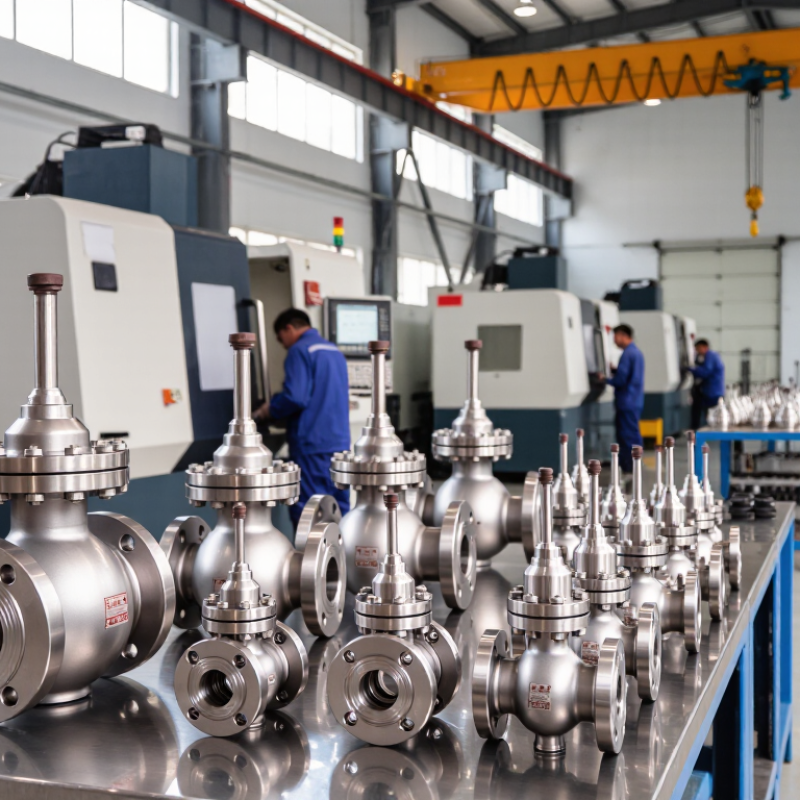
China’s ball valve and globe valve industry is organized as a layered manufacturing network. Large factories usually handle casting, forging, machining, assembly, and pressure testing under one roof. Smaller workshops often specialize in bodies, stems, seats, actuators, or custom machining. This structure helps suppliers control costs, but quality can vary between production lines.

The top ten suppliers are not always the ten largest factories. Some are integrated manufacturers with testing laboratories and export teams. Others are engineering companies that coordinate production through approved subcontractors. Regional clusters support this system with foundries, CNC workshops, seal producers, coating services, and inspection agencies. Ball valve production often emphasizes tight shutoff and fast operation. Globe valve production requires careful attention to flow direction, disc alignment, and throttling performance.

Factory experience matters during supplier evaluation. A serious buyer should review material certificates, heat numbers, welding records, and hydrostatic test results. A visit should include the machining area, assembly benches, calibration room, and finished-goods warehouse. Look closely. Paint can hide poor surface preparation, while polished documents cannot replace witnessed testing. International standards improve consistency, but certificates alone do not prove daily process control. Supplier rankings can also mislead because public data may be outdated, incomplete, or based on advertising. A better comparison examines product range, actual capacity, inspection discipline, response speed, and after-sales records. Some suppliers still need stronger traceability and more transparent subcontractor management. That weakness deserves attention before a purchase order is released.

Top 10 Ball Valve and Globe Valve Suppliers in China

China Top 10 Ball Valve and Globe Valve Suppliers

The top 10 ball valve and globe valve suppliers in China should be judged by evidence, not website claims. The global industrial valve market remains substantial. Fortune Business Insights valued it at about USD 76 billion in 2023 and projected continued growth through 2032. China remains important because of its broad machining, casting, and actuator supply chains. However, “top” is not always the same as “best.” A supplier serving chemical plants may not suit a steam system.

A practical review should examine pressure classes, body materials, seat performance, and test records. API, ISO, and ASME compliance can support credibility, but certificates require verification. Request current material certificates, hydrostatic test reports, fugitive-emission results, and traceable heat numbers. In my experience, small details matter. A clean data sheet cannot replace a witnessed inspection. Supplier stability, export experience, and spare-part response also deserve attention. Reports from MarketsandMarkets identify energy, water, and process industries as major valve demand areas, supporting careful sector-based selection.

Tips: Compare at least three technical quotations. Check whether the quoted valve matches the pipeline medium, temperature, pressure, and operating frequency. Ask for a factory video audit or independent inspection. Also, leave room for doubt. Some suppliers publish impressive capacities, yet their quality records may remain unclear. Confirm production lead time, warranty terms, testing scope, and after-sales support in writing. A lower price can become expensive when leakage, delay, or incorrect materials appear later.

China Top 10 Ball Valve and Globe Valve Suppliers? - Top 10 Ball Valve and Globe Valve Suppliers in China
Rank Supplier Code Main Valve Portfolio Typical Size Range Common Pressure Ratings Body and Trim Materials End Connections Common Industry Standards Typical Applications Export Capability Technical Capability Score
1 China Supplier A Floating Ball Valves Trunnion Ball Valves Globe Valves DN15–DN1200
NPS ½–48
Class 150–1500
PN10–PN250
Carbon steel, stainless steel, duplex stainless steel; 316 stainless steel trim Flanged, butt-weld, socket-weld, threaded API 6D, API 608, API 623, ASME B16.34, ISO 5211 Oil and gas pipelines, petrochemical plants, water treatment International documentation and container-export support ★★★★★
2 China Supplier B Cryogenic Ball Valves Top-Entry Ball Valves Globe Valves DN15–DN800
NPS ½–32
Class 150–900
PN16–PN160
Stainless steel, low-temperature carbon steel, nickel alloy trim Flanged, extended-body, butt-weld, threaded API 6D, BS 6364, API 623, ASME B16.34 LNG, air separation, low-temperature process systems Project-based export and inspection support ★★★★★
3 China Supplier C Metal-Seated Ball Valves Control Globe Valves Steam Valves DN25–DN600
NPS 1–24
Class 150–600
PN16–PN100
Carbon steel, alloy steel, stainless steel; hard-faced seats Flanged, butt-weld, wafer, lugged API 6D, API 623, IEC 60534, ASME B16.34 Power generation, steam service, high-temperature processes Technical files and third-party inspection available ★★★★☆
4 China Supplier D Jacketed Ball Valves Lined Ball Valves Globe Valves DN15–DN500
NPS ½–20
Class 150–600
PN10–PN100
Stainless steel, carbon steel, PTFE-lined bodies, alloy trim Flanged, threaded, socket-weld, sanitary clamp API 608, API 623, ASME B16.34, ISO 15848 Chemical processing, pharmaceuticals, food and fine chemicals Custom engineering and multilingual documents ★★★★☆
5 China Supplier E Cast Ball Valves Forged Ball Valves Bellows-Sealed Globe Valves DN8–DN600
NPS ¼–24
Class 150–600
PN16–PN100
Forged carbon steel, stainless steel, alloy steel, graphite packing Flanged, threaded, socket-weld, butt-weld API 608, API 623, ASME B16.34, EN 12266 General industrial piping, boiler systems, chemical plants Standard export packaging and product certificates ★★★★☆
6 China Supplier F Wafer Ball Valves Flanged Ball Valves Globe Valves DN15–DN1000
NPS ½–40
Class 150–600
PN10–PN100
Ductile iron, carbon steel, stainless steel, elastomer and PTFE seats Wafer, lugged, flanged, threaded API 608, API 623, EN 593, ASME B16.34 Water supply, HVAC, irrigation, municipal infrastructure High-volume production and OEM documentation support ★★★★☆
7 China Supplier G Full-Welded Ball Valves Pipeline Globe Valves Check Valves DN50–DN1400
NPS 2–56
Class 150–1500
PN25–PN250
Carbon steel, low-temperature steel, stainless steel, tungsten-carbide coatings Full-weld, flanged, butt-weld API 6D, API 608, ASME B16.34, ISO 14313 Long-distance oil, gas and district-energy pipelines Pipeline project support and welding documentation ★★★★☆
8 China Supplier H Sanitary Ball Valves Miniature Ball Valves Process Globe Valves DN8–DN300
NPS ¼–12
Class 150–300
PN10–PN40
304/316L stainless steel, PTFE, EPDM, FKM elastomers Threaded, clamp, flanged, welded ASME BPE, API 608, ASME B16.34, ISO 2852 Food processing, beverage production, biotechnology, clean utilities Small-batch customization and export packing ★★★☆☆
9 China Supplier I Actuated Ball Valves Electric Globe Valves Pneumatic Valve Packages DN15–DN800
NPS ½–32
Class 150–600
PN16–PN100
Carbon steel, stainless steel, ductile iron, PTFE and reinforced seats Flanged, wafer, threaded, socket-weld API 608, API 623, ISO 5211, IEC 60534 Industrial automation, water systems, HVAC, process skids Actuator sizing and control-accessory support ★★★☆☆
10 China Supplier J Economy Ball Valves Bronze Globe Valves Brass Valves DN8–DN200
NPS ¼–8
Class 125–300
PN10–PN40
Brass, bronze, stainless steel, carbon steel, PTFE and NBR seats Threaded, soldered, flanged, compression API 608, ASME B16.34, EN 331, EN 1074 Building services, plumbing, compressed air, light industrial use Standard catalog supply and consolidated shipment support ★★★☆☆

How to Compare Supplier Quality, Certifications, and Production Capacity

China Top 10 Ball Valve and Globe Valve Suppliers?
How to Compare Supplier Quality, Certifications, and Production Capacity

When evaluating Chinese ball valve and globe valve suppliers, inspect more than polished catalogs. Ask for material certificates, heat-treatment records, and serial-number traceability. A reliable factory can connect one valve to its steel heat number. Request recent hydrostatic and seat-leakage test reports, not empty templates. Small details matter.

Certifications should match the service conditions and destination market. Check the scope, issuing body, expiration date, and product coverage of each certificate. ISO 9001 supports process control, but it does not automatically prove valve performance. Depending on the application, standards for pressure testing, fire safety, emissions, or pipeline service may also apply. I have seen documents look correct while covering a different valve series. That mistake is easy to miss.

Production capacity requires evidence. Compare monthly output with machining centers, assembly areas, test benches, and available operators. Ask how many valves are tested daily and how peak orders affect lead times. A supplier promising ten thousand units may outsource critical machining. That deserves careful questioning. Review factory audit photos, inspection plans, nonconformance records, and sample valves from current production. During a video audit, request a live tour of the foundry or machining line. Capacity claims can be optimistic. A practical comparison weighs defect history, response speed, technical drawings, and after-sales support alongside price. Reliability is built through repeatable records, not impressive wording.

China Top 10 Ball Valve and Globe Valve Suppliers? How to Compare Supplier Quality, Certifications, and Production Capacity

This chart presents a practical 100-point evaluation framework for comparing valve suppliers. The weighting emphasizes quality systems, applicable certifications, manufacturing capacity, testing, traceability, compliance, and delivery performance. It is a comparison methodology rather than a ranking of named companies.

How to Choose the Best Chinese Valve Supplier for Your Needs

China Top 10 Ball Valve and Globe Valve Suppliers?
How to Choose the Best Chinese Valve Supplier for Your Needs

A “top 10” list is only useful when its criteria are visible. Grand View Research valued the global industrial valves market at about USD 78.7 billion in 2023, with continued growth expected through 2030. This expanding market attracts capable factories and inexperienced traders. Check manufacturing depth, not website design. Ask whether the supplier machines bodies, assembles actuators, and performs pressure testing in-house.

Match the supplier to your operating details. Provide valve type, size, pressure class, media, temperature, connection standard, and required cycle life. For example, a DN100 stainless steel ball valve for corrosive service needs different evidence than a carbon-steel globe valve for steam. Request material certificates, heat numbers, dimensional reports, and hydrostatic test records. ISO 5208 provides recognized leakage-testing methods, while ISO 9001 supports process control. Neither certificate replaces a witnessed inspection.

Look closely at production evidence. Request a recent factory audit, calibration records, and a sample inspection plan. A clear video helps, but it is not proof. Third-party inspection can verify casting quality, wall thickness, coating, and nameplate data before shipment. Procurement teams often focus on price and forget spare parts. That mistake becomes expensive. Also compare lead time, warranty response, packing quality, and communication speed. One weak point remains: published rankings rarely measure long-term field reliability. Ask for traceable project references and test a sample before approving larger orders.