How to Choose the Right Floating Ball for Your Needs?
Choosing the right floating ball is not a matter of selecting the largest or cheapest option. It requires a clear understanding of the working environment, fluid behavior, and equipment design.
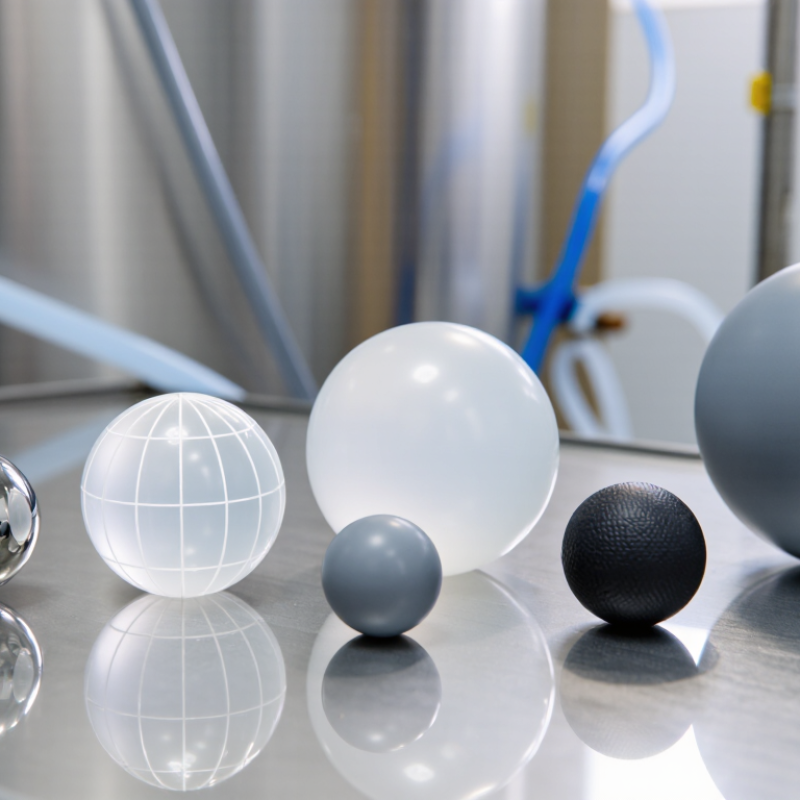
As floating-ball engineer Michael R. Hayes explains, “A reliable floating ball must match the fluid before it matches the equipment.” This practical view matters. A ball that performs well in clean water may fail in oil, chemicals, foam, or sediment-heavy liquids. Material selection comes first. Stainless steel, polypropylene, PVC, and specialized elastomers each respond differently to temperature, pressure, abrasion, and chemical exposure.
Size also affects performance. A small ball may sink under deposits or lose visibility inside a narrow tank. An oversized ball can touch the walls, restrict movement, or produce inaccurate level readings. Measure the opening, guide tube, valve seat, and operating range carefully. Do not guess.
Buoyancy deserves equal attention. The ball must remain stable without floating too high or becoming partially submerged. Density, wall thickness, and internal structure all influence that balance. In a real installation, turbulence can make a theoretically suitable ball behave poorly.
The details are often unglamorous. Check surface finish, sealing compatibility, temperature limits, and cleaning requirements. Confirm the manufacturer’s test data, not only its product photograph. No selection method is perfect. Field conditions change, and neglected maintenance can defeat a good design.
This guide examines those decisions closely. It connects technical specifications with practical use, helping you choose a floating ball that remains visible, stable, and dependable over time.
Define Buoyancy Needs: 998 kg/m³ Freshwater and 1,025 kg/m³ Seawater
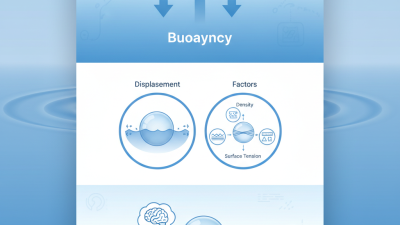
Choosing a floating ball starts with water density, not diameter alone. Use 998 kg/m³ for typical freshwater and 1,025 kg/m³ for seawater. These values align with freshwater standards and the UNESCO International Equation of State of Seawater. NOAA also reports average ocean salinity near 35 practical salinity units, supporting seawater calculations around 1,025 kg/m³.
The difference looks small, but it affects performance. A 200-millimeter sphere displaces about 0.00419 m³. In freshwater, it creates roughly 41.0 newtons of gross buoyant force.
In seawater, the force rises to about 42.1 newtons. That extra 1.1 newtons equals approximately 112 grams of additional lifting capacity. Small equipment may notice it.
Do not treat that figure as usable lift. Subtract the ball’s mass, fittings, rope, and expected fouling. Temperature also changes density, while waves can repeatedly pull the ball below the surface.
I have seen designs fail because “floating” was mistaken for “safely supporting.” Leave practical reserve. A 20–30% margin is often more realistic, although the correct value depends on motion, depth, and service time.
Recheck the calculation when moving from a lake to tidal water. Salinity is not constant, and real water rarely matches the table perfectly.
Match Ball Volume to Load Using Archimedes’ 9.81 N/kg Buoyant Force
How to Choose the Right Floating Ball for Your Needs?
A floating ball must displace enough water to support its own weight and the attached load. Archimedes’ principle gives a practical starting point. In fresh water, each kilogram of displaced water creates about 9.81 newtons of buoyant force. Therefore, one cubic metre of submerged volume can provide nearly 9,810 newtons of lift.
Calculate the total supported mass first. Include the ball, rope, fittings, and working load. A 20-kilogram load with a 5-kilogram ball requires displacement for at least 25 kilograms. Since one litre of fresh water weighs roughly one kilogram, the ball needs about 25 litres of effective displacement. Do not select exactly 25 litres. Waves, splash, ageing, and uneven loading can reduce available lift. A practical margin of 25% to 40% is more dependable.
Shape also affects performance. A large ball may float high, but a narrow attachment point can tilt it sharply. Test the ball in water with the real hardware attached. Measure the freeboard, or the height remaining above the surface. Salt water provides slightly more lift, while muddy or cold water may change field conditions. The calculation is useful, but it is not perfect. Manufacturing tolerance and hidden ballast can reduce volume. A controlled trial often reveals problems that a clean formula misses. Keep the ball well above its working limit.
How to Choose the Right Floating Ball for Your Needs? - Match Ball Volume to Load Using Archimedes’ 9.81 N/kg Buoyant Force
| Nominal Ball Volume |
Equivalent Spherical Diameter |
Gross Water Displacement |
Gross Buoyant Force |
Assumed Ball Mass |
Theoretical Maximum Payload |
Recommended Working Load |
Typical Load Matching |
| 10 L |
267 mm |
10 kg of fresh water |
98.1 N |
0.8 kg |
9.2 kg |
4.6 kg |
Small markers, light covers, compact floats |
| 20 L |
336 mm |
20 kg of fresh water |
196.2 N |
1.2 kg |
18.8 kg |
9.4 kg |
Small equipment, signs, light utility loads |
| 50 L |
456 mm |
50 kg of fresh water |
490.5 N |
2.5 kg |
47.5 kg |
23.8 kg |
Medium platforms, cable supports, service floats |
| 100 L |
575 mm |
100 kg of fresh water |
981.0 N |
5.0 kg |
95.0 kg |
47.5 kg |
Large equipment, pontoons, heavy support assemblies |
| 200 L |
725 mm |
200 kg of fresh water |
1,962.0 N |
10.0 kg |
190.0 kg |
95.0 kg |
Heavy platforms, marine hardware, modular flotation |
| 500 L |
985 mm |
500 kg of fresh water |
4,905.0 N |
25.0 kg |
475.0 kg |
237.5 kg |
Large flotation systems and heavy-duty buoyancy modules |
Calculation basis:
In fresh water, buoyant force = displaced volume × 9.81 N/kg. The theoretical maximum payload equals displaced water mass minus the ball mass. The recommended working load is set at approximately 50% of the theoretical payload to retain freeboard and provide a practical reserve for motion, uneven loading, waves, and measurement uncertainty.
Important: The equivalent diameters assume a perfect sphere. Actual performance depends on the ball’s shape, material, immersion depth, water density, attachment hardware, operating conditions, and certified working-load limits. Seawater provides slightly more buoyancy than fresh water, but fresh-water calculations are the conservative reference for general selection.
Select Materials by Density: HDPE 930–970 vs Stainless Steel ~8,000 kg/m³
Choosing a floating ball starts with density, not appearance.
ISO 1183-1 testing data places HDPE density around 930–970 kg/m³. Freshwater is close to 1,000 kg/m³. Therefore, an HDPE ball can float with useful buoyant reserve. Its surface may sit noticeably above the waterline.
Stainless steel typically has a density near 7,700–8,000 kg/m³, according to engineering material data compiled by the World Stainless Association. A solid stainless ball will sink. It needs a sealed hollow design to float.
For example, a 100 mm sphere displaces about 0.524 litres of water. That creates roughly 5.1 newtons of buoyant force in freshwater, before subtracting the ball’s own weight and fittings.
Density is only the starting point. I have seen designs fail because engineers compared material density but ignored valves, chains, coatings, and trapped water. A thin stainless shell may resist impact and heat better, yet one small leak can remove its buoyancy. HDPE is lighter and naturally buoyant, but sunlight, temperature, and chemical exposure still require checking. ISO 1183 results also vary with grade and test conditions. That detail matters.
Specify the complete assembly density, operating temperature, and fluid density before selecting the final floating ball.
Check Pressure and Depth: Water Pressure Rises About 1 bar per 10.3 m
Choosing the right floating ball starts with the water depth, not its appearance.
Water pressure rises about 1 bar per 10.3 meters of depth. That increase can affect buoyancy, shell strength, seals, and valve performance. A ball suitable for a shallow tank may deform or respond poorly in deeper water.
Measure the vertical distance from the water surface to the floating ball’s working position. Depth changes everything. Then check the equipment’s pressure rating, including pressure from pumps, closed valves, and sudden flow changes.
In field inspections, I also check whether the ball moves freely without rubbing against the tank wall. Even a small obstruction can create an unreliable level reading.
A larger ball usually provides more buoyancy, but larger does not always mean better.
Its material must resist the water temperature, chemicals, sunlight, and repeated impact. My first estimate was too generous once; the ball floated, but the valve closed slowly under load. That experience changed my selection process. I now compare real operating depth with the manufacturer’s tested limits and leave a practical safety margin. Do not rely on depth alone. Tank shape, water density, connection design, and installation angle can also influence performance. Measure it carefully.
Verify Density with ASTM D792 and Quality Controls with ISO 9001
How to Choose the Right Floating Ball for Your Needs?
Density decides whether a floating ball performs reliably. ASTM D792 measures plastic density and specific gravity through displacement methods. Ask for the test method, specimen condition, temperature, and measured result. A ball should remain less dense than the surrounding liquid, but the margin matters. Heavy coatings, trapped moisture, or a thick seam can change buoyancy. In practical selection work, I also compare the stated density with the ball’s actual weight and volume. A neat datasheet is useful, not unquestionable.
ISO 9001 supports controlled processes, but it does not automatically prove every ball is suitable. Check whether production records identify the material batch, molding date, inspection results, and rejected units. Quality controls should include dimensional checks, surface inspection, wall-thickness sampling, and leak testing when the application requires it. Request calibration records for weighing and measuring equipment. That detail can reveal weak testing practices. I once overlooked temperature effects during a buoyancy review. It was a small mistake, but it changed the result.
Tips
Define the liquid, operating temperature, pressure, and expected service life before ordering. Compare ASTM D792 results from representative samples, not one convenient specimen. Ask for ISO 9001 scope and current certificates. Inspect several balls from the same lot. Rotate them in a clear container and watch for tilting, sticking, or uneven movement. If the application is critical, repeat the test independently. Perfect certainty is rare. Careful verification is still worthwhile.