Blogs | Steelstrong Valves

How to Choose the Right Carbon Steel Ball Valve?

Choosing the right carbon steel ball valve affects safety, flow control, maintenance, and operating costs. A valve may look simple, yet its internal materials and pressure rating determine real performance. The correct choice begins with understanding the medium, temperature, pressure, pipe size, and installation environment.

Consider where the valve will work. Clean water, compressed air, oil, and mildly corrosive fluids may require different sealing materials. Carbon steel offers strength and durability, but it is not automatically suitable for every chemical service. Check the ball, stem, body, and seat specifications carefully. A stainless steel ball may improve resistance in selected applications. PTFE seats often support clean and moderate-temperature services, while reinforced options may suit demanding conditions. Details matter.

Look at the pressure class and connection type. A threaded valve may fit small maintenance lines, while a flanged design can support larger industrial piping. Confirm the actuator torque before installation. An undersized actuator may stall when deposits build around the ball. That detail is easy to miss. Inspect certification documents, test records, and supplier experience before purchasing. Reliable manufacturers should explain material grades, pressure testing, temperature limits, and traceability clearly.

There is no universal best valve. That assumption causes expensive mistakes. Field conditions can also differ from design documents. Recheck actual temperatures, cycling frequency, and available space. If the service is corrosive, unusually hot, or safety-critical, consult a qualified engineer and follow applicable industry standards. A careful selection process protects equipment, operators, and long-term reliability. Yet even good decisions deserve review after installation. Performance data may reveal what the original specification overlooked.
How to Choose the Right Carbon Steel Ball Valve?

What Is a Carbon Steel Ball Valve?

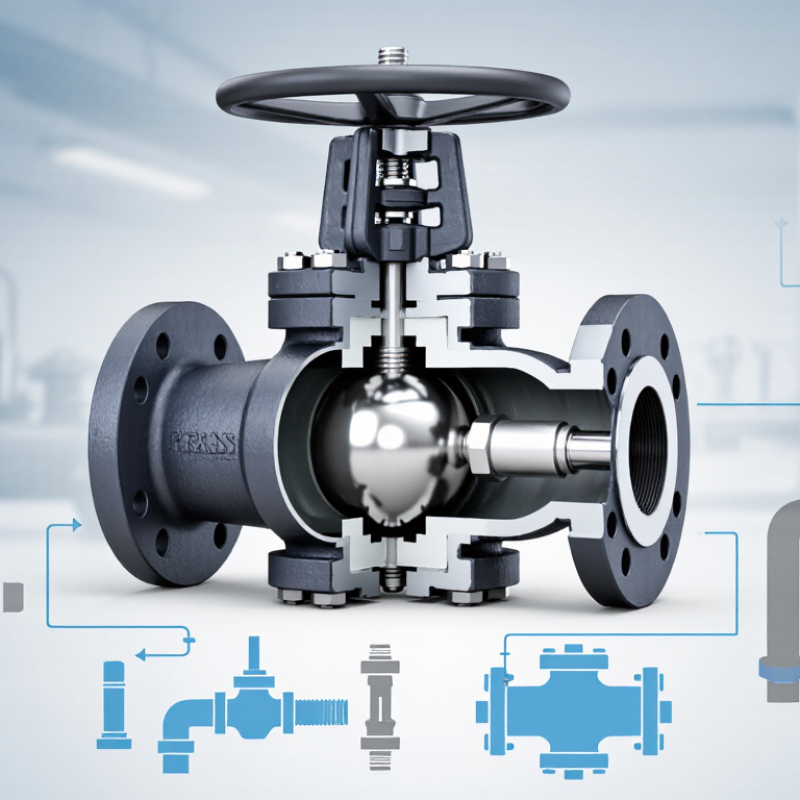
A carbon steel ball valve is a shutoff device with a drilled metal sphere inside its body. When the handle turns 90 degrees, the opening aligns with the pipeline. Flow passes through. Turning the handle back blocks the passage. Carbon steel provides strength, stiffness, and good resistance to mechanical impact. It is often selected for water, oil, gas, and industrial process lines, when the operating conditions are suitable.

The valve usually includes a body, ball, stem, seats, and seals. Each part affects performance. The seats create the seal around the ball, while the stem transfers handle movement. Carbon steel is not automatically suitable for every fluid. Moisture, corrosive chemicals, temperature changes, and pressure can cause trouble. I have seen valves chosen by pipe size alone, then replaced because the seal material was wrong. That mistake is easy to overlook.

Tips: Check the fluid, pressure, temperature, connection type, and required flow direction before choosing. Verify the pressure rating from reliable technical documents. Inspect the ball and seats for scratches, dust, or uneven wear. A smooth quarter-turn should not require excessive force. If the valve feels tight, do not force it. The cause may be pipeline stress, contamination, or incorrect installation. Selecting a stronger valve can still be a poor choice if its seals cannot tolerate the service conditions.

Which Operating Conditions Define the Valve Requirements?

How to Choose the Right Carbon Steel Ball Valve?

Which Operating Conditions Define the Valve Requirements?

Operating conditions should guide the valve choice, not the pipeline size alone. Record the media, pressure, temperature, flow rate, and cycling frequency. A valve handling dry air faces different demands than one carrying hot oil. Small details matter.

Carbon steel suits many industrial services, but it is not universally resistant. Confirm the fluid’s corrosive nature, water content, and chemical concentration. Check the body rating at the actual operating temperature. Pressure can rise sharply during thermal expansion or sudden closure. That risk deserves careful review.

The valve seat and seals must also match the temperature range and media. A seal that performs well at room temperature may harden near a heater.

Consider how the valve will operate. Manual service may be practical for occasional isolation. Frequent cycling may require an actuator and position feedback. Tight spaces can affect handle movement and maintenance access. Outdoor installations need protection against moisture and external corrosion.

In field evaluations, overlooked drainage and support often create avoidable problems. Yet the first specification is not always correct. Recheck the process data with operators, drawings, and inspection records. Select pressure class, connection type, bore size, and fire-safe features only after these conditions are verified. Applicable standards and local engineering requirements should remain part of the approval process.

How Should Valve Materials and Pressure Ratings Be Compared?

How to Choose the Right Carbon Steel Ball Valve?

Comparing valve materials and pressure ratings starts with the actual service conditions. Carbon steel offers strength, impact resistance, and good value for many industrial systems. However, it is not automatically suitable for every fluid. Check the medium, operating temperature, corrosion potential, and required cleanliness before selecting the body material. The ball, stem, and seats also need review. They may require different materials.

Pressure ratings must be compared at the correct temperature. A valve rated for high pressure at room temperature may tolerate less pressure when the process becomes hot. Check the applicable ASME Class or PN rating, then review the manufacturer’s pressure-temperature chart. Do not compare Class 300 with PN40 as if they were identical. Their testing methods and rating systems differ. Small details matter.

Include pressure surges, pump starts, and thermal expansion in the calculation. The normal line pressure is only part of the risk. End connections and wall thickness should match the piping system. Pressure-test records and material certificates can also confirm reliability. A practical mistake is choosing the highest rating without checking seat compatibility. That can increase cost and reduce service life. I still find this step overlooked. A careful specification should state the fluid, temperature range, pressure, valve size, connection standard, and inspection requirements. When these details remain vague, even a strong carbon steel valve may be the wrong choice.

How to Choose the Right Carbon Steel Ball Valve?

How Should Valve Materials and Pressure Ratings Be Compared?

The chart compares commonly used ASME pressure classes for carbon steel valves at approximately 100°F (38°C). Higher pressure classes provide greater pressure capacity, but the correct selection must also consider temperature, valve body material, trim, end connection, operating cycles, and applicable design standards.

Material / Standard Typical Valve Application Selection Consideration
ASTM A216 WCB cast carbon steel Industrial process, oil and gas, water, and general utility service Suitable for many moderate- and high-pressure applications when temperature and corrosion limits are acceptable
ASTM A105 forged carbon steel Forged valve bodies, small and medium nominal sizes, high-pressure service Forged construction can be advantageous where compact geometry and high mechanical strength are required
ASTM A216 WCC cast carbon steel General pressure-containing valve components Confirm the approved temperature range, impact requirements, welding procedure, and fluid compatibility

Reference basis: representative ASME B16.34 pressure-temperature ratings for carbon steel valve pressure classes at approximately 100°F (38°C). Actual allowable pressure may vary with material grade, temperature, valve design, wall thickness, end connection, and governing code. Always verify the pressure-temperature table and certification for the specific valve.

Which Port, Connection, and Actuation Options Fit the System?

Choosing the right carbon steel ball valve starts with the system’s flow path. A full-port valve matches the pipe’s inside diameter and reduces turbulence during continuous flow. A reduced-port valve costs less and may suit isolation service. Grand View Research valued the global industrial valves market at about USD 78.5 billion in 2023, showing how widely these selection decisions affect process equipment.

Connection details matter in the field. Threaded ends work well on small, accessible lines, but vibration can loosen them. Socket-weld ends create compact, strong joints. Butt-weld ends suit permanent piping and reduce leak points. Flanged connections simplify removal around pumps or filters. Check pressure and temperature ratings against ASME B16.34, not only the pipe schedule. Carbon steel also needs protection in wet, acidic, or salt-rich service. I have seen a sound valve fail early because the fluid chemistry was treated as an afterthought.

Tips: Match the port to the pump curve. Confirm ISO 5211 mounting dimensions before ordering an actuator. Use pneumatic actuation where fast cycling matters; electric actuation fits remote control with available power. Add a spring-return actuator when the process requires a defined loss-of-power position. The 2024 industrial valve outlook from Research and Markets continues to identify automation as a major growth driver. Still, automation is not always better. Manual operation can be safer on an infrequently used, visible isolation point. Review torque, cycle frequency, emergency action, and maintenance access together. Availability data should come from the actual operating site, not only a catalogue.

How to Choose the Right Carbon Steel Ball Valve? - Which Port, Connection, and Actuation Options Fit the System?
Selection Category Option Typical Characteristics Main Advantages Key Limitations Best-Fit Applications Selection Guidance
Port Design Full Port Bore is approximately equal to the connected pipe inside diameter. Provides a relatively unobstructed flow path. Lower pressure loss; reduced turbulence; suitable for pigging and systems where solids or viscous media may accumulate. Usually larger, heavier, and more expensive than a reduced-port valve of the same nominal pipe size. Hydrocarbon transfer, utility lines, slurry-compatible service, pipeline sections, and frequent cleaning operations. Choose when maintaining flow capacity, minimizing pressure drop, or allowing pipeline cleaning is important.
Reduced Port Bore is smaller than the connected pipe inside diameter, creating a controlled internal restriction. Lower purchase cost; compact construction; often lighter and easier to install. Higher pressure drop than a full-port design; may be less suitable for pigging or media containing solids. General water, compressed air, fuel gas, heating, and process isolation service. Choose when flow capacity is acceptable and compact size or cost control is more important than minimum pressure loss.
End Connection Threaded Female or male pipe threads; commonly used on smaller nominal pipe sizes. Thread forms may include NPT, BSPP, or BSPT, depending on the system. Fast installation; compact envelope; no welding equipment required. Thread engagement can leak if assembled incorrectly; less suitable for repeated disassembly, vibration, or larger sizes. Instrument air, water, low-to-medium size utility lines, and maintenance isolation points. Confirm thread standard, nominal size, pressure rating, sealant compatibility, and local installation codes.
Socket Weld Pipe is inserted into a recessed socket and fillet-welded around the joint. Compact, strong, and resistant to external leakage when properly welded. Requires qualified welding; internal pipe gaps and weld procedure must be controlled to reduce corrosion or fatigue risks. Small-bore high-pressure process lines, instrumentation systems, and applications requiring permanent joints. Choose when a compact permanent connection is required and qualified welding procedures are available.
Butt Weld Valve ends are beveled and welded directly to matching pipe ends. Continuous low-profile flow path; strong connection; reduced potential for external leakage. Removal requires pipe cutting; welding heat can affect seats, seals, and coatings if installation procedures are not followed. Process pipelines, high-integrity services, and systems requiring a permanent, streamlined connection. Verify end-to-end dimensions, pipe schedule, weld bevel geometry, and post-weld inspection requirements.
Flanged Valve is bolted between mating flanges using a gasket and the specified bolt pattern. Easy removal and maintenance; suitable for larger sizes and equipment interfaces. Heavier and longer than threaded or welded designs; gasket selection and bolt tightening are critical to leak prevention. Pumps, tanks, filters, large utility lines, process skids, and systems requiring regular inspection. Match flange facing, pressure class, drilling standard, gasket material, bolt material, and available installation space.
Actuation Manual Lever Quarter-turn hand lever; normally used for on/off isolation rather than throttling. Simple, low cost, no external power required, and easy to identify visually. Requires operator access; unsuitable for remote operation or frequent cycling in difficult locations. Small and medium isolation valves, maintenance points, and low-cycle utility systems. Select when the valve is accessible and manual operation meets the required operating frequency and torque.
Pneumatic Actuator Uses compressed air; available in spring-return or double-acting configurations. Fast response; suitable for frequent cycling; can provide fail-open or fail-closed action with spring return. Needs a reliable air supply, filtration, control accessories, and correct torque sizing. Automated process isolation, hazardous-area installations where suitable certification is provided, and high-cycle service. Specify operating pressure, available air pressure, cycle time, fail position, solenoid voltage, and maximum valve torque.
Electric Actuator Motor-driven quarter-turn actuator powered by an electrical supply, with optional position feedback and control signals. Convenient remote control; precise open/close indication; no compressed-air system required. Slower than many pneumatic systems; requires electrical protection and environmental suitability. Water treatment, HVAC, utility automation, remote installations, and systems with available electrical control infrastructure. Confirm voltage, phase, enclosure rating, duty cycle, ambient temperature, fail-safe needs, and actuator output torque.
Body and Trim Carbon Steel Body with Compatible Internal Materials Carbon steel is commonly selected for strength and cost efficiency; ball, stem, seats, and seals must match the medium and temperature. Good mechanical strength and broad industrial availability. Carbon steel can corrode in water, oxygen-rich, or chemically aggressive environments without suitable material selection or protection. Oil and gas utilities, compressed air, heating systems, fuel service, and general industrial process lines. Check fluid composition, chloride content, corrosion allowance, temperature, pressure, seat material, seal material, and required testing standard.
Operating Function On/Off Isolation Ball valves are quarter-turn devices generally intended for fully open or fully closed operation. Rapid shutoff, reliable sealing, and low operating effort when correctly sized. Continuous throttling can cause seat wear, unstable flow, noise, or erosion unless the valve is specifically designed and approved for that duty. Isolation, emergency shutdown, equipment maintenance, drain lines, and bypass arrangements. Use a control valve or other suitable regulating device when accurate continuous flow control is required.
Note: Pressure and temperature capability depends on the valve design, pressure class, seat and seal materials, end connection standard, fluid, and applicable code. Confirm the manufacturer’s certified rating and the complete system requirements before selection.

How Can You Verify Quality, Safety, and Long-Term Performance?

Choosing the right carbon steel ball valve starts with evidence, not appearance. Ask for the body grade, trim materials, pressure class, and temperature limits. Match them to the fluid, pressure, cycling frequency, and environment. An EN 10204 3.1 material certificate supports traceability, but it does not replace inspection. Use positive material identification on critical pressure-retaining parts. Check casting records, heat treatment, dimensions, and weld procedures. Small gaps matter.

Quality verification should follow recognized procedures. Request shell and seat test records under API 598 or ISO 5208. Records should show the test medium, pressure, duration, leakage result, and inspection date. Do not accept “tested” as sufficient evidence. For fire-risk service, confirm fire-safe design testing under API 607 or API 6FA. Also verify an anti-static path and a blowout-resistant stem. A clean document can still hide poor assembly. Inspectors should examine sealing surfaces, bolt condition, actuator alignment, and packing compression.

Long-term performance depends heavily on corrosion control. The NACE IMPACT study estimated global corrosion costs at about 2.5 trillion dollars annually, equal to roughly 3.4% of global GDP. Select suitable corrosion allowance, coatings, drainage, and compatible seat materials. Review cycle-test results and operating torque, not only pressure ratings. Plan for corrosion. No certificate predicts every service failure. Service records, maintenance access, spare seals, and realistic inspection intervals often reveal weaknesses that factory testing misses. Specifications can still be incomplete.