2026 Best Globe Check Valve Type for Global Buyers?
Choosing the best globe check valve for global buyers is not a simple catalog exercise. The right choice depends on flow direction, pressure, temperature, fluid properties, and installation space. A compact valve may suit a tight piping run, while a heavier design may better tolerate demanding service. Small details matter. Seat material, trim, end connections, and maintenance access can affect performance long after purchase.
In this guide, fictional valve application engineer Maya Chen offers a practical reminder: “A check valve must match the system’s real operating conditions, not just its nameplate rating.” That distinction is easy to miss. Buyers should compare pressure-drop data, closure behavior, material compatibility, and documented test results. They should also confirm whether the globe check valve is intended for horizontal or vertical installation, since orientation can influence operation. Product descriptions alone rarely answer every question.
Global sourcing adds another layer. Specifications, terminology, and available certifications can vary by supplier and market. Ask for clear drawings, traceable material information, and evidence supporting the stated ratings. A low purchase price may look attractive, but unclear documentation or difficult servicing can create avoidable costs. Even careful selection has limits: actual performance depends on the complete piping system and operating conditions. This overview will help buyers compare common globe check valve types, identify useful questions, and avoid treating one design as a universal solution.
What Is a Globe Check Valve and How Does It Work?
What Is a Globe Check Valve and How Does It Work?
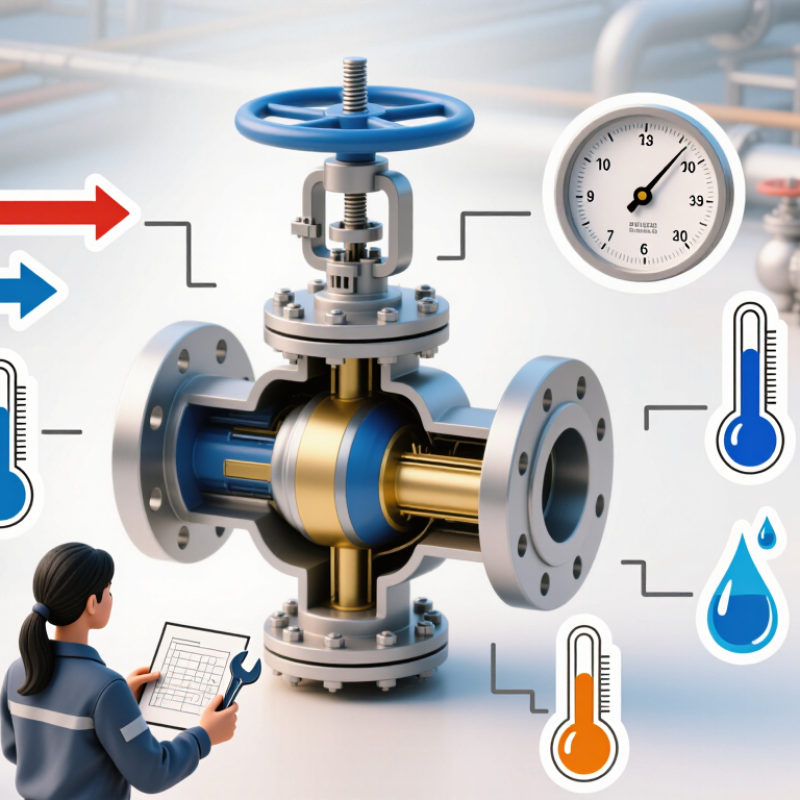
A globe check valve combines flow control with automatic backflow prevention. Its rounded body guides fluid through an internal seat. When inlet pressure rises, the disc lifts from the seat. The medium then passes through the valve. If pressure reverses, the disc moves downward and blocks the passage. No manual action is normally required.
Some designs include a stem and handwheel. This arrangement can stop flow manually while the check function remains active. However, terminology differs between suppliers and regions. A “globe check valve” may describe a lift check valve or a stop-check valve. That difference matters during procurement. Buyers should confirm the internal design, flow direction, pressure class, temperature range, and connection standard. A wrong assumption can cause noise, leakage, or poor shutoff.
Tips: Request a sectional drawing before ordering. Check the arrow on the body against the pipeline direction. For steam, water, or corrosive service, verify body and seat materials carefully. Consider installation space, because these valves may be heavier than wafer-style alternatives. A slowly closing disc can reduce water hammer, but performance depends on system speed. Field conditions are rarely perfect. Keep a small margin for pressure changes, yet avoid oversized valves, which may operate poorly at low flow.
Key Globe Check Valve Types and Their Operating Principles
Globe check valves combine flow control with automatic protection against reverse flow. Their internal disc moves in response to fluid pressure, rather than relying on a handwheel during normal check-valve operation. When forward pressure lifts the disc, flow passes through the seat. If pressure drops or reverses, the disc returns to the seat and limits backflow. The exact response depends on the design, orientation, and operating conditions.
Lift-type designs guide a disc or piston vertically within the body. They suit clean, steady service, but debris can interfere with movement.
Y-pattern designs place the passage at an angle to reduce the sharp turns found in standard globe bodies. This can lower pressure loss, though it does not eliminate it.
Angle-pattern bodies turn flow through roughly 90 degrees, which may simplify piping layouts. Some globe stop-check valves also allow the stem to hold the disc closed, providing an isolation function.
A useful distinction: automatic closure and manual shutoff are not the same job. Check the manufacturer’s pressure, temperature, and installation data before selection. Small details matter. In practice, choosing by connection size alone is tempting, and sometimes wrong. A valve that closes too slowly may allow reverse flow; one that closes too quickly can create pressure surges.
How to Compare Materials, Pressure Ratings, and Temperature Limits
A globe check valve should be selected against the actual fluid, operating pressure, and temperature—not its name alone. Body materials such as carbon steel, stainless steel, or bronze suit different service conditions. Check chemical compatibility, corrosion risk, and possible erosion from particles. A stainless body may resist some corrosive environments, but the seat and trim still need separate review.
Pressure ratings depend on material, valve design, and temperature. A rating shown at room temperature may not apply at elevated temperatures. Compare the valve’s pressure-temperature chart with the system’s normal and peak conditions, including pressure surges. Temperature limits also depend on seals and seat materials. Small details matter. I have seen selection notes omit startup temperatures, which can make an otherwise sound choice uncertain.
Tips: Confirm fluid composition, flow direction, and installation orientation. Ask for documented pressure-temperature limits and inspect the material specifications. Check the required cracking pressure and pressure drop, too. If operating data is incomplete, pause before ordering; a cautious estimate is still an estimate. Recheck the assumptions with the project’s engineering requirements and actual service conditions.
Selecting the Best Globe Check Valve for Different Global Applications
Selecting the best globe check valve starts with the fluid, pressure, temperature, and installation position—not the catalog image. Globe-pattern check valves guide the disc through a compact body, helping control reverse flow in high-pressure lines. Their tighter flow path can create greater pressure loss than a swing design. Check the system’s allowable pressure drop before choosing one. Small details matter.
For water applications, suspended solids and changing flow rates affect seating and wear. The United Nations World Water Development Report 2024 notes that agriculture accounts for about 70% of global freshwater withdrawals. That scale makes reliable backflow prevention important in pumping networks, but it does not make one valve suitable for every line. Confirm fluid cleanliness, orientation, closing speed, and maintenance access. A valve that works well in a clean process line may struggle with debris.
For energy and process service, match body and trim materials to the fluid and operating envelope, then verify pressure-temperature ratings against recognized engineering standards. The International Energy Agency’s Global Hydrogen Review 2024 reports that hydrogen demand reached nearly 100 million tonnes in 2023, mostly in refining and industry. That growth highlights the need for careful material and leakage assessment; it does not establish that a standard valve is hydrogen-ready. Ask for documented test data and review it critically. Selection gets messy in real plants.
Global Standards, Certifications, and Buyer Evaluation Criteria
For global buyers, the best globe check valve is not defined by size alone. It must match pressure, temperature, fluid, and installation direction. ASME B16.34 provides pressure-temperature ratings for valve bodies and pressure-retaining parts. ISO 5208 defines leakage testing methods. API 594 is also widely referenced for check valve design and inspection requirements. These standards reduce uncertainty, but they do not replace project-specific engineering.
Certification deserves careful review. The ISO Survey of Management System Certifications reports more than one million ISO 9001 certificates worldwide, showing how common quality systems have become. However, an ISO 9001 certificate does not prove valve performance. Ask for material certificates, heat numbers, pressure-test records, and calibration evidence. For European projects, verify applicable Pressure Equipment Directive requirements. For North American projects, check local registration rules and pressure codes. A certificate without traceable test data is weak evidence.
Tips: Compare the valve’s cracking pressure, reverse-flow response, seat material, and allowable orientation. Request a drawing showing flow direction and maintenance clearance. Confirm whether tests follow ISO 5208, API 598, or the project specification. In field reviews, buyers sometimes focus too heavily on certificates and overlook water hammer, trapped solids, or noisy closure. That is an imperfect habit. A technically compliant valve can still perform poorly when the operating data is incomplete. Record assumptions before approval, then challenge them.