Blogs | Steelstrong Valves

Why Choose Filter Cartridges for Water Filtration?

Choosing the right water treatment method can feel less obvious than it appears. A clear glass of water does not prove that every contaminant has been removed. Filter Cartridges offer a practical, measurable option for homes, offices, laboratories, and industrial systems. They fit inside compact housings, support different filtration grades, and can target sediment, chlorine, odors, or specific impurities.

Peter S. Cartwright, a recognized water treatment consultant, puts it plainly: “The filter is only as good as the application.” That principle matters. A five-micron cartridge may capture visible particles, while activated carbon can improve taste and reduce chlorine. Neither choice is universal. The source water, flow rate, pressure, temperature, and target contaminant must guide selection.

Small details matter. A cartridge clogged with rust may reduce pressure before it looks dirty. An oversized system may waste money without improving safety. I have also seen people delay replacement because the water still appears clear. That is a weak assumption. Filter Cartridges require scheduled inspection, correct installation, and honest performance expectations.

Their main advantage is control. Users can replace one filtration stage without rebuilding an entire system. Maintenance is usually straightforward. Still, convenience should not replace testing. Independent laboratory results and manufacturer specifications provide stronger evidence than marketing claims. The best choice balances contaminant reduction, service life, operating cost, and application demands. Sometimes, a simpler system performs better.
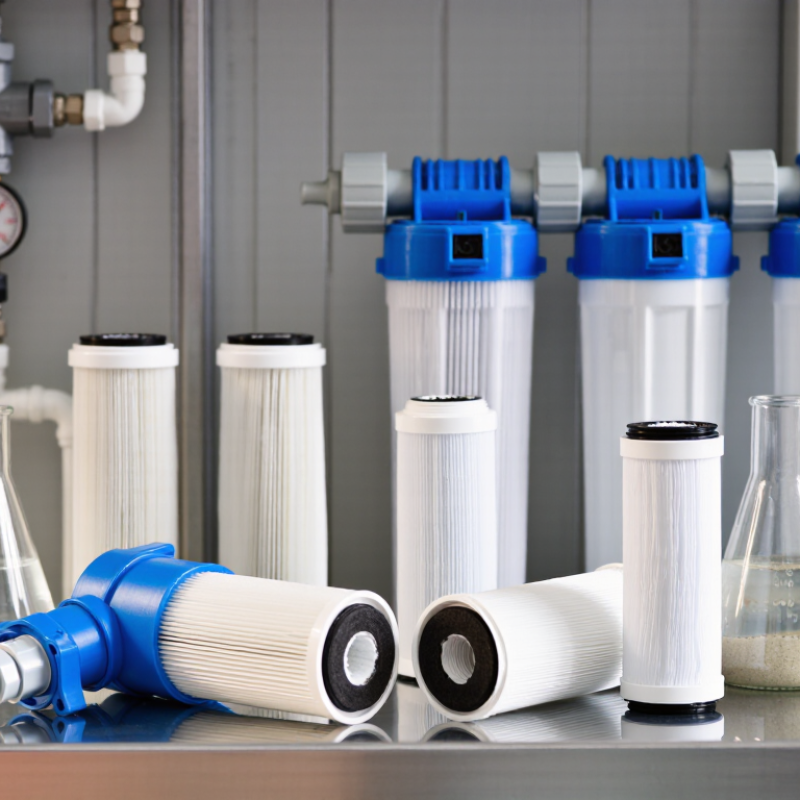
Why Choose Filter Cartridges for Water Filtration?

Filter-Cartridge Basics: Sediment Capture, Adsorption, and Membrane Separation

Why Choose Filter Cartridges for Water Filtration?

Filter cartridges offer a practical way to target different water problems. Sediment cartridges trap visible particles such as sand, rust, and pipe scale. A clear housing can reveal gradual discoloration. That visual change helps operators judge when replacement may be necessary. However, appearance alone is not a reliable performance test.

Adsorption cartridges commonly use activated carbon to reduce chlorine, certain odors, and some organic compounds. Their effectiveness depends on contact time, water chemistry, and cartridge condition. Membrane cartridges separate much smaller particles through fine pores. They can reduce microorganisms or dissolved contaminants when correctly selected and maintained. The exact result depends on pore size and system design. I have seen users choose the finest cartridge available, then face slow flow and frequent maintenance. Smaller pores are not automatically better.

Tips: Test the incoming water before choosing a cartridge. Record pressure, flow rate, and replacement dates. Change cartridges according to measured performance, not habit alone. Clean housings carefully and check seals for leaks. If water quality changes, retest the system. A cartridge may capture sediment well but cannot solve every contamination problem. This limitation deserves honest attention.

Micron Selection: Compare 0.2–100 µm Ratings with Particle-Size Data

Choosing a filter cartridge starts with the particles you need to control, not the smallest number on a datasheet. Micron ratings usually range from 0.2 to 100 µm. A 0.2 µm cartridge targets very fine particles, while a 100 µm cartridge captures visible grit, sand, and rust flakes. However, a micron rating does not automatically prove microorganism removal. The test method and cartridge design matter.

Particle-size data provides better guidance. If testing shows most particles measure between 8 and 20 µm, a 10 µm cartridge may reduce the load but could clog quickly. A 20 µm option may protect flow longer, yet allow smaller particles through. Nominal ratings indicate approximate retention, while absolute ratings follow stricter test conditions. Always check both terms.

Measure turbidity, pressure loss, and particle counts when possible. In practical installations, I compare water samples before and after filtration. A clear sample can still contain fine particles. I once chose a cartridge based only on its advertised micron value, and the pressure dropped sooner than expected. The particle distribution was broader than assumed. That mistake showed why flow rate, dirt capacity, and replacement intervals belong beside micron selection. Leave room for uncertainty. Water rarely behaves like a laboratory sample.

Safety Verification: NSF/ANSI 42, 53, 58, and 401 Certification Claims

Why Choose Filter Cartridges for Water Filtration?

Filter cartridges offer a practical way to target specific water concerns. Their value depends on verified performance, not appearance. NSF/ANSI 42 generally covers aesthetic effects, such as chlorine taste, odor, and visible sediment. NSF/ANSI 53 addresses specific health-related contaminants, including certain metals or cysts. These standards do not mean one cartridge removes every pollutant. The exact claim matters.

NSF/ANSI 58 applies mainly to reverse osmosis systems. It may cover reduction performance, material safety, and system efficiency. NSF/ANSI 401 concerns selected emerging contaminants, such as certain pharmaceuticals or personal-care compounds. A certification mark alone is not enough. Check the certified model, tested contaminant, rated capacity, flow rate, and operating conditions. The cartridge may be certified only within a tested system. This detail is often missed.

Read the performance sheet.

In routine inspections, installers should also check housing seals, pressure limits, and replacement dates. A well-certified cartridge can perform poorly when installed incorrectly or used beyond its capacity. Sediment buildup may reduce flow before the filter appears dirty. That can be easy to overlook. Water quality also changes between buildings and supply networks, so a laboratory test or local water report can guide cartridge selection. I would avoid assuming that certification equals universal safety. It is evidence, not a promise for every situation. Regular replacement, clean handling, and documented maintenance make the certification claim more meaningful.

Why Choose Filter Cartridges for Water Filtration?

NSF/ANSI certification claims are product-specific. This chart presents a simplified view of the primary claim categories associated with each standard: aesthetic effects, health effects, reverse osmosis system performance, and emerging contaminants. A certification does not mean that every product reduces every contaminant covered by a standard; always verify the exact certified claim and test conditions.

Water-Quality Targets: WHO’s <1 NTU Turbidity Recommendation

Why Choose Filter Cartridges for Water Filtration?

Turbidity is more than cloudy water. It can shield microorganisms from disinfectants and signal poor treatment performance. The World Health Organization recommends turbidity below 1 NTU for effective drinking-water disinfection. Its Guidelines for Drinking-water Quality also note that lower turbidity supports better microbial control (WHO, 2022).

Filter cartridges can help reach this target through controlled depth or surface filtration. Their compact design supports staged treatment in homes, laboratories, and small facilities. The United States Environmental Protection Agency requires conventional and direct filtration systems to maintain 0.3 NTU or less in at least 95% of monthly samples. Turbidity must not exceed 1 NTU at any time under this standard (U.S. EPA, Surface Water Treatment Rule).

Measurement matters.

A cartridge with a smaller nominal pore rating may reduce suspended particles, but it does not automatically remove dissolved chemicals or disinfect water. Operators should record inlet and outlet turbidity, pressure loss, flow rate, and cartridge service time. In practice, a visibly clean cartridge can still perform poorly after channeling or incorrect installation. That detail is easy to miss. I would also avoid treating WHO’s 1 NTU value as a finish line; a lower, stable reading offers more operational confidence. Results still depend on raw-water quality, maintenance discipline, and validated testing methods.

Capacity and Service Life: Compare Rated Liters, Flow, and Pressure Drop

When selecting filter cartridges, rated capacity should be treated as a test result, not a promise. A cartridge rated for 10,000 liters may reach that figure under clean water and controlled flow. Real water is less predictable. Sediment, hardness, organic matter, and temperature can shorten service life significantly.

A practical comparison should include rated liters, recommended flow, and pressure drop. Flow rate shows how much water the cartridge can handle while maintaining useful performance. Yet high flow can reduce contact time and increase particle loading. Pressure drop reveals how hard the system must work. Measure pressure before and after the cartridge, especially when the filter is new. A rising difference signals clogging.

Service life depends on both capacity and operating conditions. In field checks, I have seen a cartridge replaced too late because its liter rating looked generous. The outlet flow had already weakened. That mistake can strain pumps and disrupt production. I also found that replacing cartridges too early wastes usable material and increases maintenance costs. A better method is to record daily volume, inlet pressure, outlet pressure, and visible water changes. Use those records to adjust the replacement point. The calculation may not be perfect. It becomes more reliable with consistent measurements.

Why Choose Filter Cartridges for Water Filtration? - Capacity and Service Life: Compare Rated Liters, Flow, and Pressure Drop
Cartridge Type Typical Micron Rating Typical Clean-Water Flow
for a 10-inch Cartridge
Typical Initial Pressure Drop Representative Rated Throughput Typical Service Life* Main Capacity and Service-Life Consideration
Melt-Blown Polypropylene Depth 1–5 µm nominal 1–3 L/min 0.05–0.20 bar at approximately 2 L/min 2,000–8,000 L 1–3 months Low purchase cost and good sediment-holding ability; pressure drop rises quickly when the depth media becomes loaded.
Pleated Polypropylene 1–20 µm nominal 3–8 L/min 0.03–0.15 bar at approximately 4 L/min 8,000–30,000 L 3–6 months Greater surface area generally provides higher flow and longer life than a similarly sized depth cartridge.
Pleated Polyester 1–25 µm nominal 4–10 L/min 0.03–0.15 bar at approximately 5 L/min 10,000–40,000 L 3–9 months Useful where high dirt-loading capacity and repeated handling are important; final performance depends on contaminant type.
Activated Carbon Block 1–10 µm nominal
for particle reduction
1–3 L/min 0.10–0.40 bar at approximately 2 L/min 2,000–10,000 L 3–6 months Capacity is often limited by chlorine or taste-and-odor reduction before the cartridge is physically blocked; slower flow improves contact time.
Pleated PES Membrane 0.20 µm absolute 1–4 L/min 0.10–0.50 bar at approximately 2 L/min 5,000–20,000 L 3–6 months Provides finer microbial-particulate retention than nominal depth media, but usually has lower flow and greater sensitivity to fouling.
Pleated Polypropylene Membrane 0.45–1.0 µm absolute 2–6 L/min 0.08–0.35 bar at approximately 3 L/min 8,000–25,000 L 3–9 months Offers a balance between fine particle retention, usable flow, and relatively high surface-area capacity.
Selection guide: Choose by the required flow rate first, then verify pressure-drop limits and contaminant load. A cartridge should normally be replaced when the differential pressure reaches the equipment limit, the treated-water quality declines, or the rated capacity is reached—whichever occurs first.
*The figures are representative engineering ranges for common 10-inch cartridges operating with municipal-quality water at approximately 15–25°C. Actual rated liters and service life vary with cartridge dimensions, media construction, water quality, inlet pressure, temperature, contaminant concentration, and the manufacturer’s test method. Rated throughput is not a guaranteed lifetime for every installation. Pressure drop is the clean-cartridge differential pressure; it increases as contaminants accumulate.