
7 Best Industrial Cable Reel Suppliers for Global Buyers
Industrial cable reels keep power and control cables organized, protected, and ready for repeated use. For buyers comparing suppliers across borders, the reel itself is only part of the decision. Drum dimensions, load capacity, winding method, cable compatibility, and operating environment all affect whether a product suits a real job site.
A useful supplier comparison looks beyond polished product photos. It considers material options, manufacturing capability, customization, quality documentation, delivery support, and responsiveness when specifications need clarification. A reel used in a workshop may face very different demands from one exposed to dust, moisture, or frequent handling outdoors. Small details matter. Ask about flange strength, shaft dimensions, and how the reel is tested under load. These checks can help narrow a shortlist, though they cannot replace a sample review or a detailed technical discussion.
This guide introduces seven Industrial Cable Reel suppliers for global buyers and highlights practical points to assess before requesting a quote. Availability, lead times, and product ranges can change, so treat any comparison as a starting point rather than a final verdict. Supplier websites do not tell the whole story. I would verify the exact model, materials, tolerances, and service terms directly, especially when a reel must fit existing equipment. Fit matters. A careful review can reduce avoidable delays and help buyers choose a supplier whose products and support match the application.
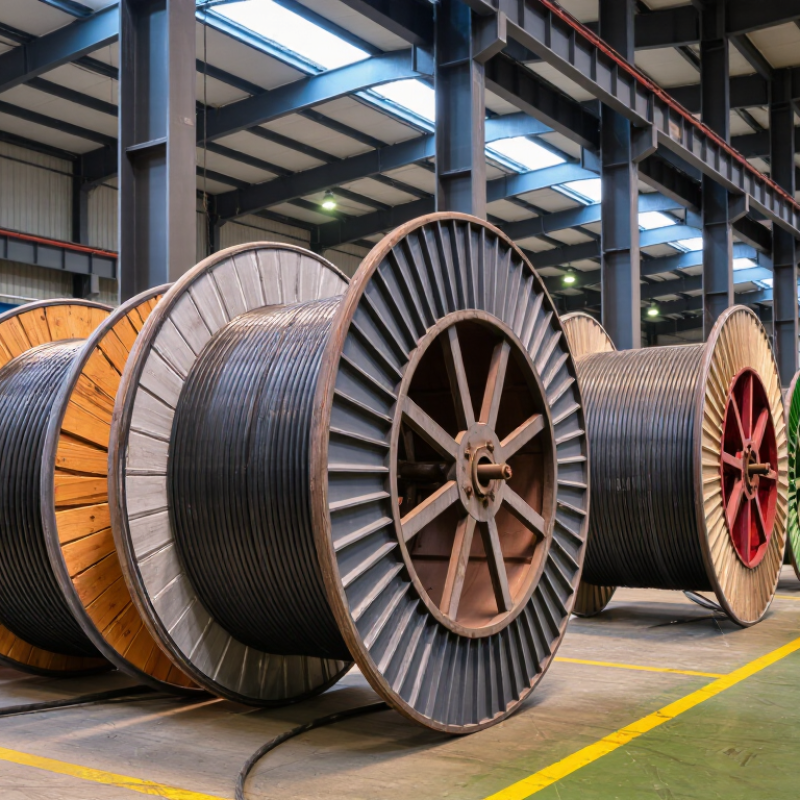
Understanding Industrial Cable Reels and Their Industrial Applications
Industrial cable reels deliver power to equipment that moves, rotates, or changes position during work. Common settings include overhead cranes, port machinery, mining equipment, and production lines. A reel keeps cable controlled instead of dragging across a floor, where abrasion, crushing, or snagging can cause downtime. Some systems use spring return; others use motorized drives or manual winding. The right choice depends on cable length, current, voltage, travel speed, and duty cycle. Small details matter. A cable that is too tightly wound can overheat, while excessive tension can damage conductors or insulation.
The International Energy Agency’s 2023 report, Electricity Grids and Secure Energy Transitions, says annual grid investment must rise from about $300 billion to more than $600 billion by 2030 to meet global needs. That figure describes grid investment, not cable-reel sales, but it shows the scale of electrical infrastructure work. In industrial settings, buyers should also check cable bend radius, reel capacity, enclosure protection, and operating temperature. A crane moving outdoors faces different conditions from a clean factory line. A specification can look right on paper and still disappoint. Field checks are sometimes missed. Confirming the actual cable diameter and travel pattern before ordering can prevent costly fit problems.
| Supplier Specialization | Common Reel Types | Typical Industrial Applications | Cables Commonly Handled | Key Buyer Checks |
|---|---|---|---|---|
| General-purpose industrial reel suppliers | Manual, spring-driven, and motor-driven reels | Factories, maintenance areas, workshops, and production lines | Power, control, and utility cables | Confirm cable length and diameter, mounting arrangement, operating environment, and expected duty cycle. |
| Heavy-duty motorized reel specialists | Motor-driven reels with suitable drive and control components | Overhead cranes, gantry cranes, bulk-material handling equipment, and long-travel machinery | Power and control cables used on moving equipment | Check travel distance, cable speed, acceleration, tension control, braking, and the required operating duty. |
| Spring-driven reel specialists | Automatic spring-retractable reels | Workstations, assembly areas, service bays, and equipment requiring retractable cable access | Flexible electrical cables and, where designed for the purpose, air or fluid hoses | Verify working reach, cable specification, mounting position, retraction force, and expected retraction cycles. |
| Mobile-equipment reel suppliers | Motorized or spring-driven reels configured for mobile machinery | Mining, construction, ports, and other applications involving traveling or repositioning equipment | Heavy-duty power and control cables | Assess route length, travel speed, acceleration, cable movement, environmental exposure, and protection against mechanical damage. |
| Marine and offshore reel suppliers | Motorized reels and engineered reel assemblies; slip rings may be used where continuous electrical connection during rotation is required | Docks, vessels, shipboard equipment, and offshore installations | Power, control, and communications cables specified for the installation | Review corrosion resistance, ingress protection, cable compatibility, applicable site requirements, and any hazardous-area needs. |
| Automation and robotics cable-management suppliers | Reels and retracting systems designed for repeated movement | Automated production equipment, moving platforms, and machinery with changing cable reach | Flexible power, control, and data cables | Check minimum bend radius, movement pattern, cycle life, cable construction, and signal requirements. |
| Custom-engineered reel integrators | Application-specific manual, spring-driven, or motor-driven reel systems | Projects with unusual cable routes, site conditions, equipment interfaces, or operating requirements | Cable types selected for the project, including power, control, or communications cables | Provide the cable data, route layout, movement profile, installation constraints, environmental conditions, and relevant standards. |
| Supplier categories describe common areas of specialization, not individual companies or a ranked performance claim. Reel capacity and suitability depend on the cable, travel, speed, duty cycle, installation, and operating environment; confirm the final specification with the supplier. | ||||