Best China Ball Valves Manufacturers and Suppliers?
Choosing the best China ball valves manufacturers and suppliers requires more than comparing prices. Buyers should examine product quality, production experience, technical support, and delivery reliability. A polished website is not enough evidence.
This guide explores how reputable Chinese suppliers design and produce ball valves for water, oil, gas, chemical, and industrial applications. It considers stainless steel, carbon steel, brass, and lined valve options. It also reviews pressure ratings, sealing performance, connection standards, actuator compatibility, and material traceability. Factory audits, sample testing, inspection records, and clear certifications can reveal how a supplier manages quality in practice.
Details matter. A properly machined ball should turn smoothly without excessive force. Threads should align cleanly, and the stem should remain firm during repeated operation. Reliable manufacturers usually explain their testing procedures instead of offering vague promises. They can also provide drawings, inspection reports, replacement parts, and responsive after-sales communication.
No supplier is perfect. Even experienced buyers may overlook communication delays, inconsistent batches, or unclear warranty terms. A small sample order can expose problems before a large contract begins. This approach reflects practical purchasing experience, not only catalog information. It also helps companies compare suppliers according to application risk, budget, compliance needs, and long-term operating costs. The goal is not to identify the cheapest factory, but to find a dependable partner whose products perform consistently under real working conditions.
China Ball Valves: Definition, Types, and Industrial Applications
China Ball Valves: Definition, Types, and Industrial Applications
A ball valve controls flow through a bored, rotating sphere.
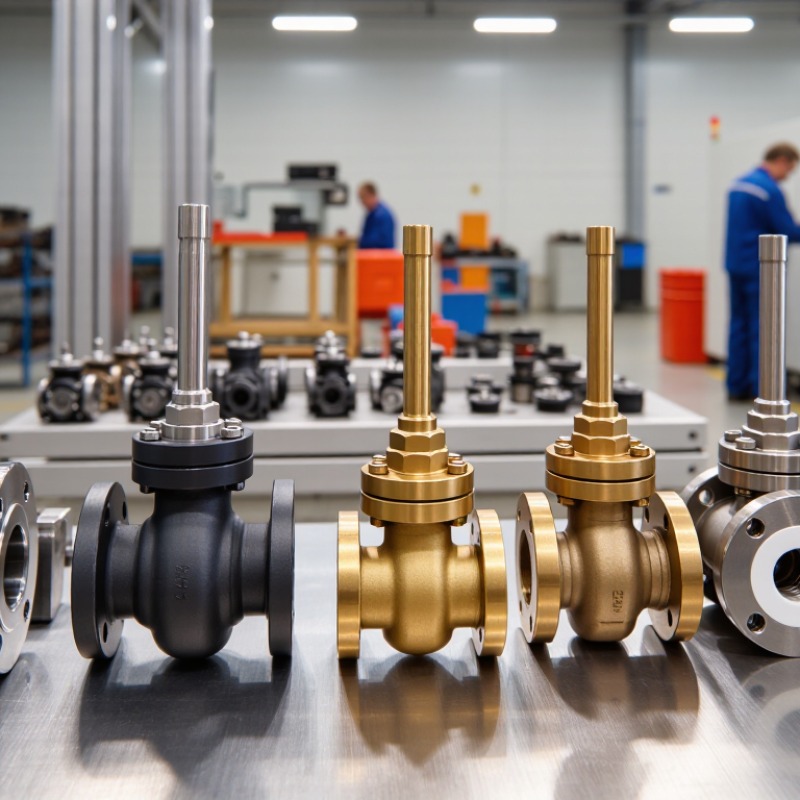
Its quarter-turn action enables fast isolation and reliable shutoff. Common designs include floating, trunnion-mounted, two-piece, and three-piece ball valves. Full-port models reduce pressure loss, while reduced-port models save space and cost.
Small details matter.
China’s ball valve manufacturing sector
serves oil and gas, chemical processing, water treatment, power generation, food production, and HVAC systems.
Floating valves
suit moderate pressures and smaller pipelines.
Trunnion-mounted valves
handle larger diameters and higher operating pressures. Stainless steel supports corrosive service, while carbon steel often fits general industrial duties. Plastic valves can serve selected water and chemical applications, but temperature limits require careful review.
MarketsandMarkets reported
that the global ball valves market could grow from approximately
USD 11 billion in 2023
to nearly
USD 14 billion by 2028.
The report connects this growth with expanding energy, infrastructure, and process industries.
Supplier selection should examine pressure class, temperature range, seat material, body casting quality, inspection records, and applicable standards. ISO 5208 testing and documented traceability improve purchasing confidence. However, a catalog rating is not field proof. Real performance also depends on installation, media cleanliness, cycling frequency, and maintenance discipline.
Buyers should request
test certificates, drawings, sample approvals, and service references
before approving bulk production.
Mistakes happen, especially when chemical compatibility is treated as an afterthought.
Key Quality Standards for Chinese Ball Valve Manufacturing
Best China Ball Valves Manufacturers and Suppliers?
Reliable Chinese ball valve manufacturing begins with standards, not attractive catalogs. Buyers should check compliance with GB/T 12237 for steel ball valves and GB/T 13927 for pressure testing. ISO 5208 can support international test verification. For pipeline service, API 6D may be required by the project specification. These standards help define design, pressure ratings, inspection methods, and acceptance criteria.
Material traceability is equally important. Each valve should connect to heat numbers, certificates, and inspection records. Common checks include chemical composition, hardness, dimensional accuracy, and body-wall thickness. Hydrostatic testing should reveal leakage or deformation before shipment. Seat testing needs controlled pressure, documented duration, and clear pass criteria. Ask for calibration records, not only test photographs. Photos can mislead.
Experience matters during supplier evaluation. Request drawings, sample reports, and a production schedule before placing a large order. Review how the supplier handles nonconforming parts. A serious factory records root causes and corrective actions. Surface finish and handle alignment may seem minor, but they affect installation and service. No factory is perfect. Even strong inspection plans can miss a damaged seal or incorrect marking. Independent pre-shipment inspection adds useful distance between production pressure and purchasing decisions. It is also wise to confirm packaging, corrosion protection, spare seals, and after-sales response in writing.
Best China Ball Valves Manufacturers and Suppliers? Key Quality Standards for Chinese Ball Valve Manufacturing
Minimum tensile strength is a useful material-quality benchmark for ball valve bodies. The values below are specified minimums for commonly used cast valve-body materials, not company or brand performance data.
Reference standards: ASTM A216 Grade WCB, ASTM A351 Grades CF8 and CF8M, and ASTM A995 Grade 4A. Actual valve suitability also depends on pressure class, temperature, corrosion resistance, casting quality, dimensional inspection, and pressure-testing results.
How to Evaluate China Ball Valve Manufacturers and Suppliers
Best China Ball Valves Manufacturers and Suppliers
How to Evaluate China Ball Valve Manufacturers and Suppliers
China remains a major sourcing base for industrial valves. Grand View Research estimated the global industrial valves market at about USD 78 billion in 2023, with steady growth expected through 2030. This demand makes supplier evaluation more important, not less.
Request verifiable documents before discussing price. Check material certificates, pressure-test records, coating specifications, and traceability numbers. ISO 5208 defines pressure-testing methods, while ASME B16.34 covers valve design, materials, and pressure-temperature ratings. A reliable manufacturer should connect each certificate to a production batch. Ask for photographs of markings on the valve body and stem. Small details often expose weak controls.
Tips: Compare at least three suppliers using the same technical sheet. Review factory capacity, inspection equipment, export experience, and response quality. A video tour helps, but it is not proof. Independent pre-shipment inspection remains valuable.
MarketsandMarkets projects continued growth in the industrial valve sector, driven by water treatment, energy, and process industries. However, market reports vary in scope, so avoid treating one forecast as certainty.
I would also test sample valves under realistic temperature, pressure, and cycle conditions. A polished sample can hide inconsistent machining. Check again. Supplier evaluation should include after-sales response, spare-part availability, warranty terms, and documented corrective actions. Cheap purchasing decisions can become expensive when a valve leaks after installation.
Leading Regions and Production Capabilities in China’s Valve Industry
China’s ball valve industry is concentrated in several strong manufacturing regions. Zhejiang, especially Wenzhou and Yuhuan, is known for compact brass and stainless steel valves. Many workshops serve plumbing, water treatment, and general industrial markets. Production lines often combine hot forging, CNC machining, assembly, and pressure testing.
Jiangsu and Shanghai focus more on engineered valves for chemical, energy, and process applications. Their factories commonly handle cast steel, forged steel, and high-temperature designs. Guangdong supports export-oriented production, with efficient machining and flexible order quantities.
A capable supplier should show test records, material certificates, traceability procedures, and clear dimensional drawings. Factory audits remain valuable. Online claims can be incomplete.
Production capability is not only about machinery. It includes inspection discipline, worker training, tooling control, and response speed after delivery. Look for hydrostatic and pneumatic testing equipment, calibrated gauges, and documented sampling plans. Some suppliers offer impressive catalogs but outsource critical machining. That deserves careful questioning. No factory is perfect. Even experienced buyers should verify sealing performance, cycle life, corrosion resistance, and compatibility with the working medium before approval. A small pilot order can reveal poor thread accuracy, uneven coating, or delayed communication.