Blogs | Steelstrong Valves

Why is Accurate Pressure Measurement Essential for Industry Success?

Accurate Pressure measurement plays a pivotal role in various industries. It impacts safety, efficiency, and product quality. Businesses cannot afford to overlook it. Fluctuations in pressure can lead to costly errors. Accurate readings help maintain operational integrity.

In industries like oil and gas, precision is vital. An incorrect pressure reading can result in hazardous situations. The consequences can be dire, affecting not only equipment but also lives. Reliable pressure measurement ensures that systems operate within safe limits.

While most industries understand its importance, many still struggle with measurement accuracy. Regular calibration and maintenance of instruments are essential, but often neglected. Companies need to invest in training staff for proper pressure measurement techniques. A commitment to accuracy leads to industry success.
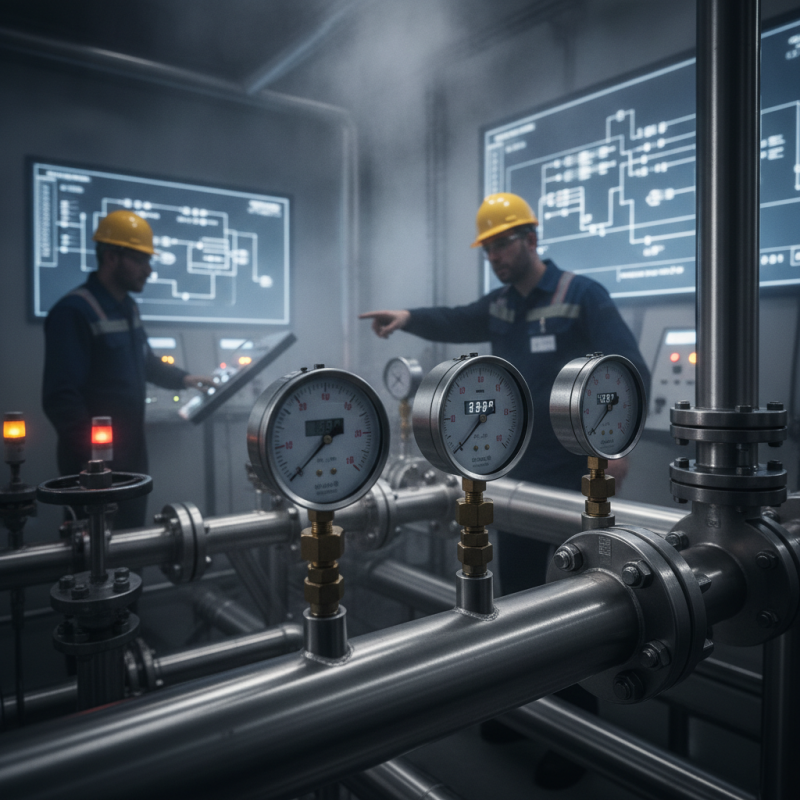
Why is Accurate Pressure Measurement Essential for Industry Success?

Importance of Pressure Measurement in Industrial Applications

In industrial applications, accurate pressure measurement is crucial for maintaining efficiency and safety. The global market for pressure sensors is expected to reach $7 billion by 2026, emphasizing their importance in sectors like oil and gas, pharmaceuticals, and manufacturing. Precision in pressure measurement minimizes risks, enhances productivity, and ensures compliance with safety regulations.

Pressure variations can lead to process inefficiencies. According to research from the International Society of Automation, poor pressure control can result in energy losses of up to 30%. Implementing reliable pressure measurement devices not only gauges correct readings but also saves significant costs in energy and maintenance.

Tips: Regular calibration of pressure equipment is essential. Schedule maintenance to avoid inaccuracies. Train staff thoroughly on pressure measurement importance. Just a small oversight can lead to major consequences. Proper training improves safety and prevents operational mishaps.

Impact of Accurate Pressure Measurement on Safety and Efficiency

Accurate pressure measurement plays a vital role in industrial operations. It directly impacts safety and efficiency. In high-pressure environments, even small inaccuracies can lead to catastrophic failures. For instance, in gas processing, improper pressure levels can cause explosions or leaks, risking lives and causing significant damage.

Moreover, precise pressure readings ensure optimal performance of machinery. Equipment operates best within specific pressure ranges. Deviations can lead to inefficient processes and increased downtime. Monitoring systems that fail to deliver accurate measurements may cause production delays and monetary losses. Small errors can compound, leading to bigger issues as time goes on.

Many industries still face challenges with pressure measurement. In some cases, outdated technology is used, leading to frequent errors. There's also a lack of trained personnel who can interpret data accurately. Addressing these gaps is essential. Upgrading equipment and investing in training can yield significant improvements. This commitment can help companies achieve higher safety standards and operational efficiency.

Why is Accurate Pressure Measurement Essential for Industry Success?

Industry Sector Impact of Accurate Pressure Measurement Safety Enhancements Efficiency Improvements
Oil and Gas Prevents blowouts and leaks Reduces explosion risks Optimizes resource extraction
Manufacturing Ensures product quality Minimizes equipment failure Speeds up production lines
Pharmaceuticals Regulates critical processes Ensures worker safety Enhances throughput
Food and Beverage Maintains product integrity Reduces contamination risks Improves processing times
Water Treatment Optimizes chemical dosing Increases public safety Enhances operational efficiency

Key Technologies for Reliable Pressure Measurement in Industry

Reliable pressure measurement is critical in various industrial applications, from maintaining equipment safety to ensuring product quality. Accurate readings can prevent costly errors and reduce accidents. A survey by the International Society for Automation indicates that 30% of industrial accidents are related to faulty pressure measurement tools. This highlights the need for effective technologies in pressure sensing.

Key technologies include piezoelectric sensors, which are vital for real-time monitoring. These sensors offer fast response times and high accuracy. They are ideal for environments where rapid changes occur.

Optical pressure sensors also play a significant role, especially in harsh conditions. Their ability to operate in extreme temperatures makes them indispensable in industries like oil and gas.

However, no technology is without flaws. Inconsistent calibrations can lead to inaccuracies. Maintenance protocols should be regularly reviewed to prevent failures. According to a recent report, around 15% of pressure measurement devices in the field are not properly calibrated. This situation calls for continuous improvement in measurement technologies and practices, ensuring accuracy and reliability in industrial operations.

Challenges in Maintaining Accurate Pressure Measurements

Accurate pressure measurement is critical in various industrial applications. Yet, maintaining precision presents numerous challenges. Environmental factors can influence readings significantly. Temperature changes, for instance, can affect sensor performance and lead to errors. Additionally, vibrations from machinery may distort measurements, yielding unreliable data.

Calibration is an essential part of ensuring measurement accuracy. Regular calibration can be time-consuming and may disrupt operations. However, neglecting this process can lead to costly errors. Even small deviations in pressure measurement can impact product quality and safety. Many industries face hurdles in training staff to understand complex measurement systems. Incomplete knowledge can result in miscalculations and mistakes.

Aging equipment can also pose a challenge. As devices wear down, their accuracy diminishes. This decline may not be immediately noticeable, prompting delays in the detection of issues. Investing in maintenance is crucial, yet often overlooked due to budget constraints. Pressure measurement requires constant attention, and any lapse can jeopardize industry success.

Future Trends in Pressure Measurement for Industrial Success

Pressure measurement plays a crucial role in the industrial landscape. Future trends are shifting toward smart sensors that offer real-time data analysis. These innovations enhance operational efficiency by reducing downtime. However, integrating new technology can be challenging. Many industries may struggle with adopting advanced systems due to a lack of training and infrastructure.

Wireless pressure sensors are becoming more common. These devices facilitate easier installation and remote monitoring. As industries move toward automation, the need for reliable pressure measurement increases. However, companies must consider cybersecurity risks associated with connected devices. Embracing automation without proper safeguards can lead to vulnerabilities.

Moreover, industries are exploring digital twins for pressure measurement simulations. This allows for better forecasting and maintenance scheduling. However, there is still a long way to go in mastering this technology. Businesses need to ensure that their workforce is equipped with the necessary skills. Continuous learning will be essential to adapt to these emerging trends. As industries evolve, only those who prioritize accurate pressure measurement will thrive.

Pressure Measurement Accuracy and Its Impact on Industrial Success